Aluminum remains central to modern manufacturing because it is lightweight, recyclable, and practical for transportation, electronics, and industrial components. The International Aluminium Institute reported global primary aluminum production of approximately 70 million metric tonnes in 2023. That scale creates a demanding question: how can manufacturers process more parts without sacrificing edge quality?
The answer is not automatic. Aluminum Deburring Machines can remove sharp edges, burrs, and machining residue with more consistent pressure than manual tools. A machined housing may leave a thin, curled burr around a drilled hole. An automated system can address that edge repeatedly, while reducing direct hand contact and improving process control. This matters when components must meet defined edge conditions under ISO 13715 or customer-specific specifications.
Labor availability also strengthens the business case. Deloitte and The Manufacturing Institute estimated that U.S. manufacturing could need 3.8 million additional workers by 2033, with 1.9 million potentially unfilled. Deburring automation cannot solve every workforce problem. It can, however, reserve skilled employees for inspection, programming, and improvement work. The machine still requires correct tooling, fixturing, coolant control, and maintenance.
That detail is easy to underestimate. Poor setup can damage soft aluminum surfaces or leave burrs behind. Industry reports often emphasize productivity, but real performance depends on part geometry and production volume. For this reason, choosing Aluminum Deburring Machines should involve sample testing, measurable cycle-time comparisons, and documented quality checks—not marketing claims alone.
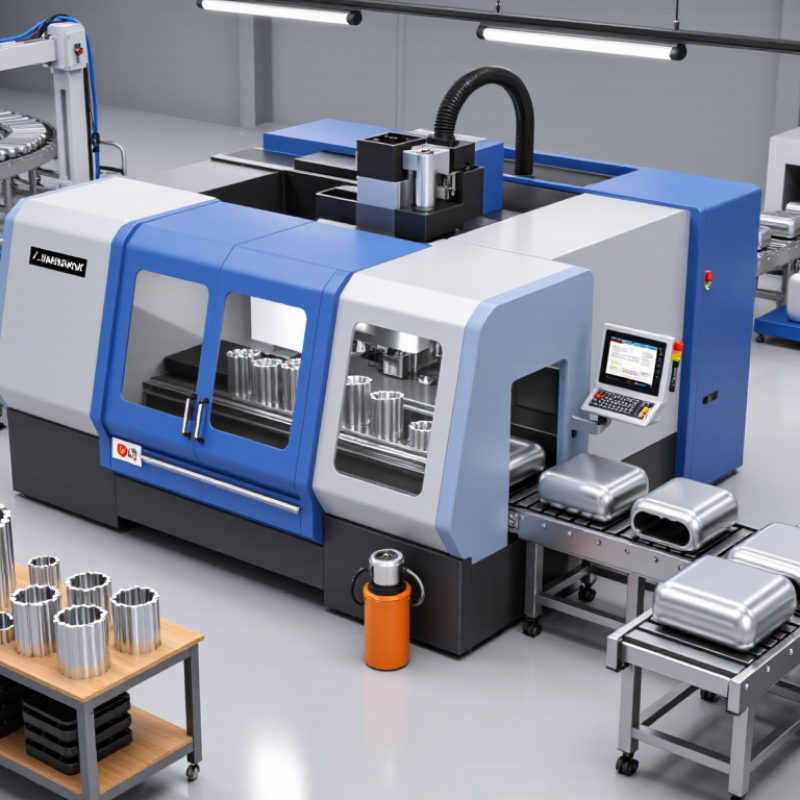
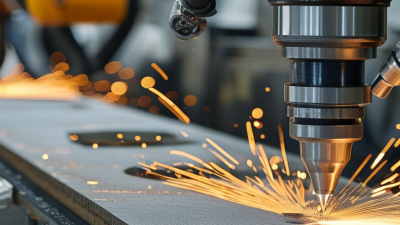
An aluminum deburring machine is industrial equipment designed to remove sharp edges, burrs, and loose metal from aluminum parts. It improves surface safety after cutting, drilling, punching, or milling. Unlike hand tools, the machine applies controlled brushing, sanding, or rotary abrasion across repeated components. This creates more consistent results and reduces strain on workers.
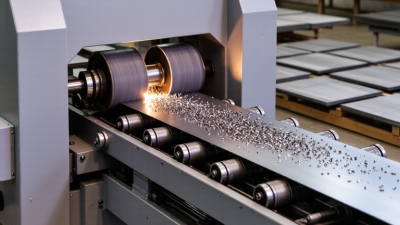
In a typical production line, operators place parts on a conveyor or inside a processing chamber. Rotating brushes contact the edges without removing excessive material. Some systems include dust extraction, adjustable speed, and programmable pressure.
These features help manage different aluminum thicknesses and shapes. It is not magic. Thin edges can still deform when pressure is too high. The first trial often needs careful adjustment.
For businesses, consistent deburring can support safer assembly and cleaner finishing. It may also reduce rework caused by sharp corners or uneven edges. However, buyers should compare working width, brush life, noise levels, and maintenance access.
Experienced operators inspect sample parts before changing full production settings. Brush wear, aluminum dust, and blocked filters can affect performance. Ignoring these details creates unreliable results.
A practical evaluation should measure cycle time, edge quality, material loss, and operator handling.
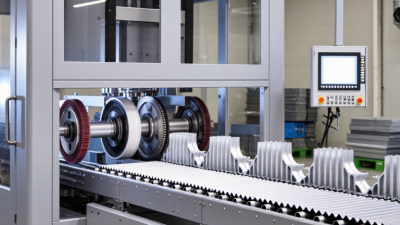
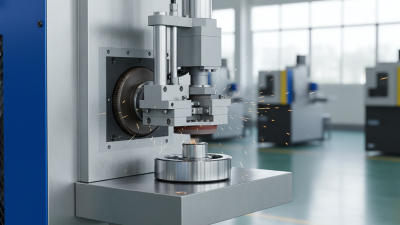
Aluminum deburring machines remove sharp edges and loose material after cutting, drilling, or milling. Their operation begins with accurate part positioning. An operator places each component on a fixture or conveyor. The machine then guides it through controlled brushing, sanding, or belt abrasion. The selected tool follows the edge without changing the part’s main dimensions.
Inside the machine, rotating brushes contact the aluminum surface with measured pressure. Some systems use multiple brush heads to reach holes, corners, and flat edges. Adjustable speed controls help match the process to the alloy, thickness, and burr size. Excess particles move toward an integrated extraction system. This keeps the working area cleaner and reduces residue on finished parts. Aluminum is relatively soft, so excessive pressure may create scratches or unwanted rounding.
Practical testing still matters. In production trials, technicians often inspect sample edges under strong light and touch them with protective gloves. They may adjust brush speed, feed rate, or fixture alignment several times. The first setting is rarely perfect. Small details matter. A slightly loose part can vibrate and produce uneven results. Measuring cycle time and edge quality also supports reliable process decisions. Manual inspection remains useful, especially when parts have complex profiles or narrow internal openings.
Aluminum deburring machines can make daily production more stable and predictable. They remove sharp edges, burrs, and loose fragments after cutting or machining. This supports safer handling for operators and more consistent part quality for customers. Smooth edges also reduce assembly problems, especially when parts must fit tightly.
For business operations, repeatability is a major advantage. A calibrated machine can process similar aluminum parts with consistent pressure, speed, and finishing results. This reduces manual variation and helps supervisors plan production more accurately. It can also shorten finishing time, lower rework rates, and release skilled employees for inspections or complex tasks. Cleaner edges may protect tools, fixtures, and connected components during later assembly.
There is a practical limitation.
Setup requires testing.
Different alloys, thicknesses, and burr sizes may need different settings. Excessive pressure can remove too much material or leave unwanted marks. Experienced operators should check sample parts with gauges, visual inspection, and touch testing before full production. Maintenance also matters; worn brushes, abrasive media, or blocked extraction systems can affect results. From a reliability perspective, companies should track cycle times, rejected parts, maintenance events, and operator feedback. These records reveal whether the machine is truly improving operations, rather than simply adding another piece of equipment.
Choosing an aluminum deburring machine starts with the parts, not the machine’s advertised speed. Thin sheets, cast housings, and machined profiles create different burrs. A sharp edge on a small bracket may need gentle brushing, while heavy casting flash requires stronger cutting action.
In workshop trials, I check part dimensions, burr thickness, and the required edge radius. A test sample matters. Aluminum can smear when tools run too hot, leaving dull marks or clogged abrasives. Consider adjustable feed speed, spindle control, and tooling that suits aluminum. Machines with simple adjustments are often easier for operators to manage. That detail is easy to overlook.
Production volume also affects the choice. A compact machine may suit short runs, but it can become a bottleneck during continuous production. Measure loading time, cycle time, and operator handling. Dust collection deserves equal attention. Fine aluminum particles can spread across nearby equipment and complicate cleaning. The system should capture debris effectively and allow routine filter inspection.
Maintenance access is another practical factor. Ask how quickly brushes, belts, and cutting tools can be replaced. Review training needs, guarding, noise levels, and emergency controls before purchase. Energy use and compressed-air requirements can change operating costs over time. I once focused too heavily on initial price and underestimated setup adjustments. That decision looked efficient on paper, but production consistency suffered. A reliable supplier should provide test results, operating guidance, and realistic capacity data rather than broad promises.
Key factors to consider include edge quality, throughput, labor requirements, process consistency, safety, and total operating cost. The chart uses a practical 100-point purchasing framework to compare their relative importance.
A suitable aluminum deburring machine should deliver consistent edge finishing while reducing manual handling and supporting the required production volume. Actual priorities should be adjusted according to part geometry, material thickness, surface-finish requirements, and available labor.
Why Choose Aluminum Deburring Machines for Your Business?
Aluminum parts often leave sharp edges after cutting, milling, or drilling. An integrated deburring step removes these edges before they reach assembly or inspection. It also reduces handling injuries, rework, and inconsistent surface quality. In daily production, this consistency can protect both delivery schedules and customer trust.
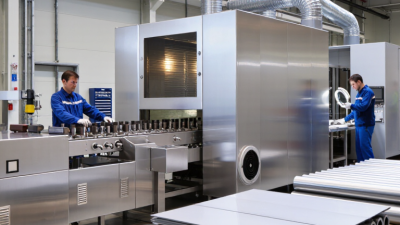
Map the part flow before installing the machine. Place deburring after machining and before washing, coating, or final inspection. A short conveyor can connect the processes without adding unnecessary handling. Include a small buffer between machines. This prevents one stoppage from stopping the entire line. The detail is easy to miss. Operators also need clear access for tool changes, cleaning, and emergency stops.
Run trials with parts from different batches, not only perfect samples. Adjust brush pressure, feed speed, and contact time for each aluminum profile. Excessive pressure may round edges or mark visible surfaces. Insufficient contact may leave burrs inside holes. Use visual checks, touch inspection, and measured edge samples to verify results. Recording these findings creates a reliable process history. Still, settings may drift as tools wear. Schedule regular checks and invite operator feedback. Their practical observations often reveal problems that production data misses.
| Business Requirement | Recommended Deburring Approach | Typical Planning Data | Production-Line Integration Method | Business Benefit |
|---|---|---|---|---|
| Consistent edge quality | Automated abrasive-brush or belt deburring with adjustable contact pressure | Target edge-radius variation: approximately ±0.05–0.15 mm after process validation | Set recipe parameters for part type, abrasive grade, feed speed, and brush height | More repeatable results and less dependence on operator technique |
| High-volume production | Continuous-feed machine with automatic part loading and unloading | Example planning rate: 6–20 parts per minute, depending on part size, burr height, and required finish | Place the machine after cutting, stamping, milling, or laser processing and before washing or inspection | Reduces manual handling and supports stable takt-time planning |
| Lightweight aluminum components | Low-pressure brushing with controlled fixturing | Aluminum density is approximately 2.70 g/cm³, so thin parts can deform if clamping or brush pressure is excessive | Use soft supports, vacuum fixtures, magnetic-free clamping, or conveyor stabilization where appropriate | Protects part geometry while removing sharp edges and loose burrs |
| Different part sizes and designs | Programmable machine with quick-change tooling and recipe storage | Typical changeover objective: 10–30 minutes, depending on tooling, fixture, and cleaning requirements | Store validated settings for feed rate, brush speed, contact depth, and pass count | Shorter changeovers and easier production of mixed batches |
| Machining burrs on cut edges | Abrasive belt or rotary-brush process selected according to burr direction and edge geometry | Use a trial matrix covering at least 3 feed speeds, 2 contact pressures, and 2 abrasive grades | Link deburring directly to the upstream CNC, saw, punch, or laser operation through a buffer or conveyor | Improves edge safety and reduces secondary manual finishing |
| Clean surface requirements | Dry deburring with dust extraction, or wet deburring followed by washing and drying | Aluminum dust is combustible under suitable conditions; dust collection, housekeeping, and risk assessment are essential | Install extraction, filtration, chip collection, and cleaning equipment according to the process risk assessment | Supports safer operation and reduces contamination before coating or assembly |
| Protection against cross-contamination | Dedicated aluminum-compatible brushes, belts, fixtures, and chip-management equipment | Keep ferrous and non-ferrous abrasive media separated where surface appearance or corrosion performance matters | Use separate tooling storage, labeled work zones, and scheduled cleaning between material families | Helps preserve aluminum surface quality and downstream finishing performance |
| Short cycle-time target | Single-pass or multi-pass continuous deburring selected through sampling trials | Example capacity calculation: 480 parts per 8-hour shift at 1 part per minute before planned downtime | Calculate capacity using: available minutes × parts per minute × expected uptime | Provides a measurable basis for labor, equipment, and buffer-size decisions |
| Inline quality control | Deburring machine combined with visual, tactile, dimensional, or camera inspection | Monitor burr presence, edge condition, dimensional change, surface scratches, and part cleanliness | Add first-piece approval, periodic sampling, and automatic reject handling where justified | Detects process drift before large batches require rework |
| Reliable operating cost | Machine selected using total cost of ownership rather than purchase price alone | Track labor minutes, abrasive consumption, energy, compressed air, extraction, maintenance, scrap, and rework | Create a monthly dashboard comparing planned and actual cost per part | Makes productivity improvements and payback calculations transparent |