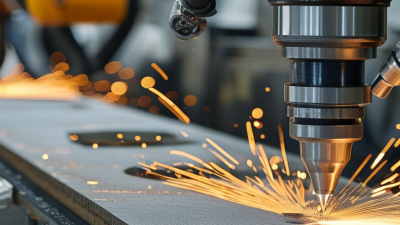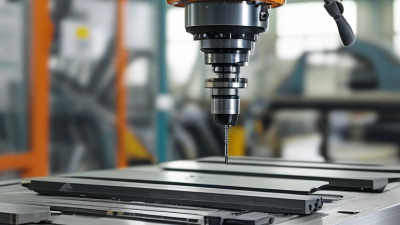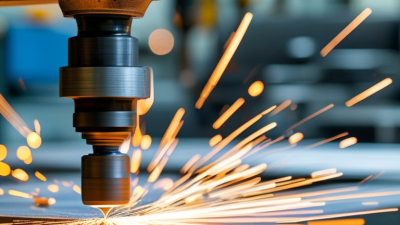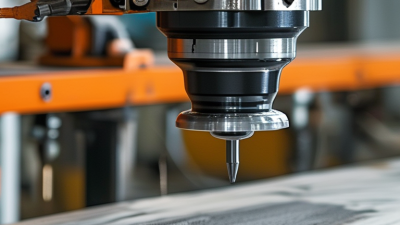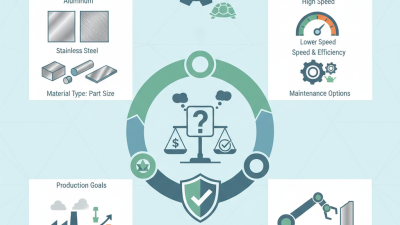
Selecting the right Aluminum Deburring Machines is not simply a matter of comparing motor power or purchase price. Burr size, alloy hardness, edge geometry, production volume, and operator safety all influence the final result. A thin 6061 aluminum panel may need gentler brushing, while a cast component may require stronger abrasive contact. Small details matter.
Industry reports support this shift toward controlled automation. Grand View Research identifies rising automation and advanced manufacturing as major forces in the global metal finishing market. MarketsandMarkets also links deburring demand with aerospace, automotive, electronics, and electric vehicle production. These reports suggest growing investment, but market growth does not guarantee a suitable machine. That shortcut can fail.
Dr. David A. Dornfeld, a respected manufacturing-systems expert, has stated, “Sustainable manufacturing minimizes environmental impacts while conserving energy and resources.” His principle applies directly to deburring equipment. A machine that removes burrs quickly but wastes material, creates excessive dust, or damages edges may reduce efficiency instead. Buyers should examine brush life, abrasive consumption, extraction performance, repeatability, and maintenance access. Measurable evidence matters more than impressive brochures.
The following 7 Tips for Choosing Aluminum Deburring Machines focus on practical selection. They consider finish quality, machine configuration, automation, safety, operating costs, and supplier support. Some recommendations may appear obvious. They are still frequently overlooked. Real production conditions are rarely perfect, so testing representative parts remains essential before committing to a machine.
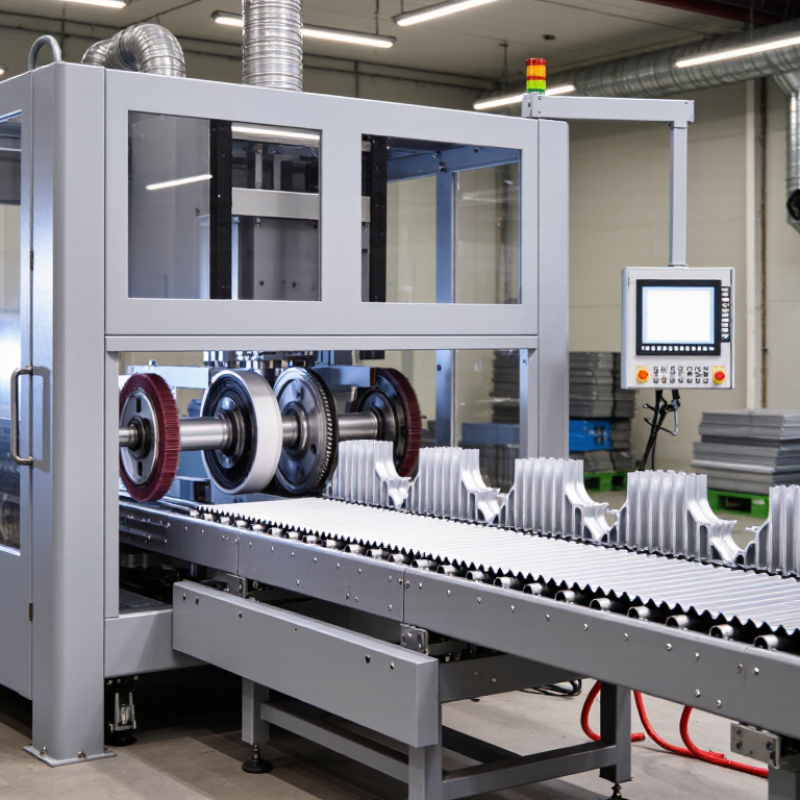
Choosing an aluminum deburring machine starts with a precise description of the part, not a catalog photograph. Identify the alloy, wall thickness, hole diameter, burr location, and expected edge radius. A 6061 housing with drilled cross-holes needs different access than a flat stamped panel. Small details matter.
Measure the burr before selecting equipment. A fine rollover burr may need brushing or abrasive contact, while a heavy machining burr may require stronger cutting action. Record the acceptable edge break, surface roughness, dimensional limits, and cosmetic zones. Define daily volume, batch size, loading method, and cycle time. Include coolant, chips, dust, and heat control. Aluminum can smear when pressure, speed, or abrasive choice is poorly matched. It may look clean but fail inspection.
Use sample parts for a controlled trial. Inspect edges under magnification, check critical dimensions, and repeat the test after tool wear begins. Test it twice. Ask operators whether loading feels stable and safe. Their feedback often reveals problems hidden in a short demonstration. A first trial can still disappoint. That is useful evidence, not failure. Revise the requirement sheet, then compare machines against the same measurable criteria. Avoid choosing solely by advertised speed. Consistent results, accessible maintenance, and documented process settings usually matter more on a busy production floor.
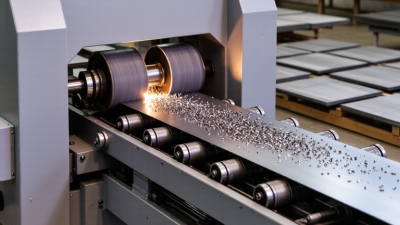
Choosing an aluminum deburring machine starts with the part, not the equipment catalog. Check the alloy, hardness, wall thickness, and burr size. Cast aluminum may need different treatment from a thin extruded profile. A vibratory machine suits batches of small, durable parts. It can process many pieces together, but contact marks may appear. Abrasive belt machines offer faster edge control on larger parts. Brush systems work well around holes and complex profiles. They need careful adjustment.
Compare the deburring method with the required finish. Tumbling uses media, water, and compound to soften sharp edges. Brushing gives more localized action and better control near critical surfaces. Automated tool-based systems can follow consistent paths, but programming takes time. Select abrasives designed for aluminum. Aggressive media may embed particles or remove too much material. Check fixture pressure, spindle speed, and heat buildup. Aluminum marks easily.
Ask for sample trials using your actual parts. Inspect edges under magnification, then measure critical dimensions. A clean-looking edge is not always dimensionally correct. I have seen a fast process leave fine scratches inside a bore. That mistake appeared only during assembly. Consider noise, dust control, maintenance access, and operator training. A machine that fits the budget may still waste labor. Results can vary between aluminum grades, so one successful trial proves little. Recheck the process after tool wear and batch changes.
7 Tips for Choosing Aluminum Deburring Machines
Tip 1: Check capacity against your actual aluminum workload, not an optimistic forecast. Measure part size, edge length, batch volume, and daily operating hours. The International Aluminium Institute reports that recycled aluminum uses about 95% less energy than primary production, so efficient handling supports both productivity and resource control. Tip 2: Examine precision. Ask for repeatability data, adjustable tool pressure, and sample results from your own alloy and geometry. Small burrs can become large assembly problems.
Tip 3: Compare speed using finished parts per hour, not advertised motor speed. Tip 4: Inspect surface finish under consistent lighting and measurement conditions. ISO 21920 provides current guidance for surface-texture specification and evaluation. A bright edge may still hide scratches, rollover, or embedded particles. Request Ra values, photographs, and physical samples. Samples matter.
Tip 5: Confirm dust collection and chip separation. Aluminum dust requires careful control and suitable equipment design. Tip 6: Test different part shapes, including thin walls and internal corners. A machine that performs well on flat plates may struggle with cast components. Tip 7: Calculate the complete cost, including abrasives, maintenance, setup time, and rejected parts. The Aluminum Association notes that aluminum demand spans transportation, construction, and packaging, where finish requirements differ considerably. I would not rely on one impressive trial. Real production is less cooperative. Run a longer pilot, record defects, and question any result that looks perfect.
Evaluate each machine against measurable requirements for capacity, precision, speed, surface finish, flexibility, operating cost, and safety.
The screening scores represent the suggested importance of each evaluation area on a 1–5 scale, where 5 is highest priority. Confirm throughput with parts per minute, precision with burr-height or edge-radius measurements, speed with feed rate, and surface finish with Ra measurements. Final selection should be validated using production samples and the required drawing specifications.
Tip 1: Check safety features before comparing speed or price. A suitable aluminum deburring machine should have enclosed cutting areas, clear guards, emergency stops, and reliable door interlocks. Ask operators to inspect these features during a live demonstration. Watch for exposed rotating tools and poorly placed controls. Guard it properly. A clean work area also reduces slip risks and aluminum dust buildup.
Tip 2: Match automation options to your actual production needs. Adjustable feed rates, part sensors, programmable settings, and automatic tool compensation can improve consistency. However, extra automation may increase training time and repair costs. Keep it simple. Test several part sizes, including thin edges and uneven castings. A useful machine should support repeatable results without removing sensible manual control.
Tip 3: Examine maintenance access carefully. Operators should reach brushes, cutters, filters, and collection trays without dismantling half the machine. Ask how often each component needs cleaning or replacement. Clear manuals, diagnostic displays, and available spare parts support dependable operation. In real shop trials, small access problems often become daily delays. I once underestimated cleaning time, and the production schedule suffered. A short maintenance demonstration may reveal more than a polished sales presentation. Check noise, vibration, chip collection, and adjustment marks while the machine is running.
Choosing an aluminum deburring machine requires more than comparing purchase prices. Measure electricity use, abrasive consumption, compressed-air demand, and expected maintenance hours. A cheaper machine can become expensive when belts, brushes, or filters wear quickly. Ask the supplier for realistic production data, not ideal laboratory figures. Test your own parts, including thin edges and irregular profiles. Small differences matter.
Supplier support affects daily operating costs. Confirm response times, technician availability, training, and spare-parts storage before signing an order. Request a written maintenance schedule and clear warranty conditions. Ask whether operators can adjust feed speed, brush pressure, and dust collection safely. Good support should include practical setup guidance, not only a manual. Keep records.
Long-term value depends on consistency. Compare hourly output with labor requirements, reject rates, energy use, and expected service life. Check whether the machine can handle future changes in part size or alloy. A modular design may reduce replacement costs later. Ask for a sample trial and inspect edge quality under bright light and touch. The numbers may look convincing, but my own estimates have sometimes missed downtime during training. Leave room for that uncertainty. A careful review should also consider resale value, upgrade options, workplace noise, and dust-control performance.
| Tip | Decision Dimension | Practical Benchmark or Data Point | What to Check Before Buying | Long-Term Value Indicator |
|---|---|---|---|---|
| 1 | Match the machine to the burr type | Abrasive belt, brush, or edge-rounding systems are commonly used for aluminum sheet and machined parts. Soft abrasive media is generally preferred to reduce surface scratching and embedded contamination. | Confirm the aluminum alloy, part thickness, burr height, edge radius requirement, part geometry, and whether both sides need processing. | Stable edge quality with fewer secondary manual operations and less scrap. |
| 2 | Calculate throughput from usable capacity | For continuous sheet-processing equipment, effective throughput is normally lower than the advertised maximum because of loading, inspection, tooling changes, and downtime. A planning utilization factor of approximately 70–85% is commonly used. | Request a trial using representative parts and record cycle time, changeover time, rework rate, and operator handling time. | The machine meets peak demand without requiring an oversized system that remains underused. |
| 3 | Compare operating energy and consumables | Industrial deburring systems commonly use several kilowatts of connected electrical load, while dust extraction can add a significant additional load. Abrasive belts and brushes are wear items whose life depends heavily on material removal and feed rate. | Obtain rated power, average power draw, extraction requirements, abrasive life in parts or hours, and replacement prices. | Lower cost per finished part, not merely lower purchase price. |
| 4 | Evaluate labor savings realistically | Manual deburring cost includes direct labor, inspection, handling, ergonomic risk, and rework. Automation creates the greatest benefit when parts are repetitive and deburring currently requires multiple manual passes. | Compare current labor minutes per part with the machine’s total touch time, including loading, unloading, inspection, and media changes. | Documented reduction in labor minutes and more consistent quality across shifts. |
| 5 | Review maintenance and safety costs | Routine costs may include abrasive replacement, brush adjustment, filter cleaning, lubrication, belt tracking, and dust-collection maintenance. Aluminum dust requires appropriate housekeeping and fire-safety controls. | Check guarding, emergency stops, interlocks, dust extraction, filter access, lockout procedures, and the recommended preventive-maintenance schedule. | Predictable maintenance with limited unplanned downtime and straightforward access to wear parts. |
| 6 | Measure supplier and service support | A practical service review should cover installation, operator training, process trials, spare-parts availability, remote diagnostics, and response-time commitments. A written service-level agreement is more useful than a general support promise. | Ask for warranty duration, technician response target, training scope, critical spare-part lead time, manuals, and commissioning acceptance criteria. | Shorter recovery time after faults and lower risk of prolonged production interruption. |
| 7 | Use a total-cost-of-ownership model | A five-year estimate should include purchase and installation, electricity, abrasives, filters, planned maintenance, training, downtime, labor savings, scrap reduction, and residual value. Simple payback can be estimated as: initial investment ÷ annual net savings. | Run conservative, expected, and high-volume scenarios using measured part data rather than brochure capacity. | Positive five-year net present value or a payback period that fits the company’s capital policy. |