Leave Your Message
Choosing the right Automatic Chamfer Machine in 2026 requires more than comparing prices and motor power. Global buyers need reliable evidence, practical performance, and support that continues after installation. A machine may look impressive in a catalog, yet produce inconsistent edge quality on real production lines. Details matter. Material type, pipe or bar diameter, chamfer angle, cycle time, tool life, and operator access all influence the final result.
This guide examines leading machines from a buyer’s perspective, combining technical knowledge with practical workshop considerations. It considers cutting accuracy, vibration control, dust management, electrical compatibility, safety design, and maintenance access. Buyers should also request sample results, inspection records, warranty terms, and clear information about spare parts. A supplier’s response to difficult questions often reveals more than a polished brochure. That gap matters.
The best choice will not be identical for every factory. A high-speed model may suit large-volume steel production, while a compact machine may better serve custom fabrication. Some advertised tolerances may depend on ideal materials, skilled operators, and regular servicing. This point deserves attention. Real conditions are rarely perfect.
Reliable suppliers should explain their testing process, provide realistic production data, and support installation across different regions. Buyers should verify applicable electrical and workplace safety requirements before ordering. This overview helps procurement teams compare options carefully, reduce avoidable risks, and identify the Automatic Chamfer Machine that matches their materials, workflow, budget, and long-term production goals.
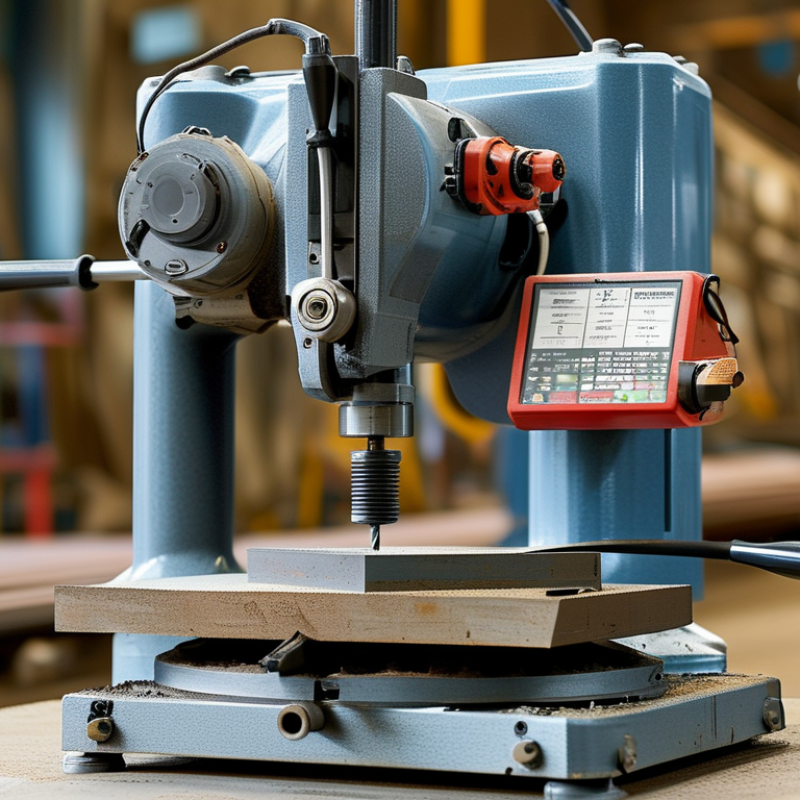
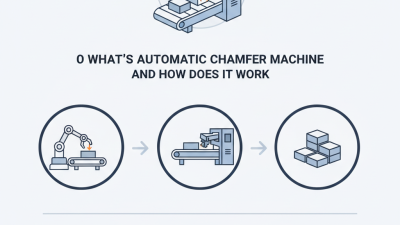
An automatic chamfer machine removes sharp edges from metal parts with minimal manual handling. It feeds, positions, machines, and unloads components through a programmed cycle. A cutting tool creates a clean bevel, commonly between 0.5 and 3 millimeters. This improves assembly, safety, coating adhesion, and dimensional consistency.
Common types include rotary chamfering machines, CNC models, tube-end chamfering systems, and integrated robotic cells. Rotary units suit repeated small parts. CNC equipment handles changing angles, diameters, and production batches. Tube systems prepare pipes before welding or joining. In a real factory, I would inspect chip control, tool access, cycle time, and operator loading height before comparing prices. Specifications can look impressive. Actual throughput may still disappoint.
Public 2026 forecasts usually place the automatic chamfer machine market in moderate growth, often around 5% to 7% annually, depending on region and product definition. Asia-Pacific remains a major manufacturing and equipment-demand center, while Europe and North America emphasize automation upgrades and labor efficiency. These figures are not perfectly consistent. Some reports include semi-automatic equipment, which changes the market size. Global buyers should request dated data, installed-capacity evidence, power requirements, and sample results using their own steel, aluminum, or stainless-steel parts. A short test run often reveals more than a polished sales sheet.
| Category | Data Dimension | Typical 2026 Benchmark or Fact | Buyer Relevance | Source or Qualification |
|---|---|---|---|---|
| Definition | Automatic chamfer machine | A machine that removes material from an edge to create a specified chamfer without requiring the operator to manually guide every workpiece through the cutting cycle. | Reduces repetitive manual work and improves consistency between batches. | General engineering definition; exact automation level varies by machine configuration. |
| Process | Material-removal method | Common methods include milling, rotary cutting, grinding, turning, and abrasive belt processing. | The correct method depends on material hardness, edge geometry, surface-finish requirements, and production volume. | Process selection is application-specific; there is no single best method for every component. |
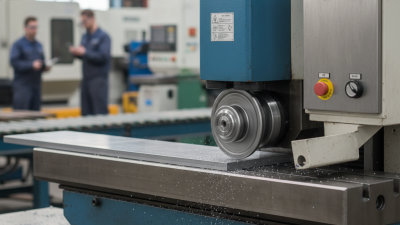
| Machine Type | Automatic plate and sheet chamfering | Typically uses powered feed rollers, a guided cutting head, or an abrasive system for continuous work on plate, sheet, or fabricated parts. | Suitable for repeated straight edges and fabrication workflows. | Capacity depends on plate thickness, workpiece width, cutting head, and feed design. |
| Machine Type | Automatic pipe and tube chamfering | Uses a chuck, collet, rollers, or dedicated fixtures to locate and rotate cylindrical workpieces while cutting the outside diameter, inside diameter, or end face. | Useful for pipe preparation, fitting production, and welding-joint preparation. | Workpiece diameter range and wall thickness must be confirmed before purchase. |
| Machine Type | Automatic bar-end chamfering | Designed for repeat processing of round, square, or hexagonal bars, often with automatic loading, clamping, cutting, and unloading. | Supports high-volume production of shafts, pins, fasteners, and machined blanks. | Automation level ranges from semi-automatic loading to integrated production cells. |
| Machine Type | CNC chamfering center | A programmable system capable of processing multiple edges, profiles, angles, or part orientations using CNC-controlled axes and tooling. | Best for complex geometries, frequent product changes, and tighter repeatability requirements. | Programming, fixturing, tooling, and operator training influence total productivity. |
| Machine Type | Robotic chamfering cell | Combines a robot or automated handling system with a chamfering unit, fixtures, guarding, and optional inspection equipment. | Appropriate for mixed parts, continuous production, and reduced manual handling. | The cell must be evaluated as a complete system, including safety controls and integration. |
| Chamfer Geometry | Common chamfer angles | 30°, 45°, and 60° are common production angles; other angles may be available through adjustable tooling or CNC programming. | The required angle should be specified on the part drawing or manufacturing standard. | ISO 13715 addresses the indication of edges of undefined shape on technical product documentation. |
| Chamfer Geometry | Typical chamfer width | Approximately 0.5–3 mm for deburring and edge breaking; approximately 3–10 mm or more for welding preparation or major edge modification. | Larger chamfers usually require greater cutting capacity, multiple passes, or heavier tooling. | These are practical application ranges, not universal machine limits. |
| Materials | Commonly processed materials | Carbon steel, stainless steel, aluminum, copper alloys, cast iron, engineering plastics, and selected hardened materials. | Tool material, cutting speed, coolant, clamping force, and chip control must match the workpiece. | Actual capability must be verified using the workpiece grade and hardness, not only the material family. |
| Productivity | Cycle-time calculation | Estimated output = available production time ÷ total cycle time × utilization rate. Total cycle time includes loading, clamping, cutting, inspection, and unloading. | A machine with a faster cutting stroke may not deliver higher output if loading or changeover is slow. | Use measured cycle tests with representative parts for purchasing decisions. |
| Productivity | Indicative utilization planning | A preliminary planning assumption of 70–85% utilization is commonly more realistic than 100%, because setup, tool changes, maintenance, inspection, and minor stoppages reduce available time. | Helps prevent overestimating annual production capacity. | Planning range only; actual utilization depends on product mix and factory organization. |
| Automation | Automation functions | Typical functions include automatic feeding, part detection, clamping, tool adjustment, chip removal, measurement, fault alarms, and batch counting. | The most valuable functions are those that remove bottlenecks or reduce operator-dependent variation. | Request a written automation scope rather than relying on the term “fully automatic.” |
| Accuracy | Dimensional and edge consistency | Repeatability is affected by machine rigidity, fixture positioning, tool wear, workpiece variation, thermal conditions, and measurement method. | A stated machine resolution alone does not guarantee finished-part chamfer accuracy. | ISO 230-1 provides a framework for testing the geometric accuracy of machine tools. |
| Surface Finish | Measurement reference | Surface roughness should be specified using a recognized parameter such as Ra, with the evaluation method and cutoff defined where necessary. | Grinding and finishing operations may be preferable when the chamfer has a strict surface-finish requirement. | ISO 21920-1 covers rules and procedures for the indication of surface texture by profile methods. |
| Applications | Typical industries | Metal fabrication, automotive components, general machining, pipe and vessel manufacturing, construction equipment, aerospace parts, energy equipment, and hardware production. | Industry choice should be based on material, part geometry, batch size, and quality requirements. | The same machine type may require different tooling and fixtures for different sectors. |
| Applications | Main purposes | Deburring, removing sharp edges, preparing weld joints, improving assembly fit, reducing handling injuries, improving appearance, and preparing surfaces for coating or finishing. | The purpose determines the required chamfer width, angle, tolerance, and surface condition. | A deburring specification should not automatically be used for a weld-preparation application. |
| Safety | Required safeguards | Common safeguards include fixed or interlocked guards, emergency stops, chip and dust extraction, safe workholding, lockout procedures, and appropriate personal protective equipment. | Safety equipment should be included in the machine specification and site risk assessment. | Applicable legal requirements vary by country and installation environment. |
| 2026 Market Data | Standalone global market size | No universally accepted public statistical category isolates automatic chamfer machines from the broader machine-tool, deburring, grinding, milling, and metal-finishing markets. | Any single global revenue figure should be treated cautiously unless its product scope, geography, currency, and methodology are disclosed. | This is a market-classification limitation, not an indication that demand or sales data do not exist. |
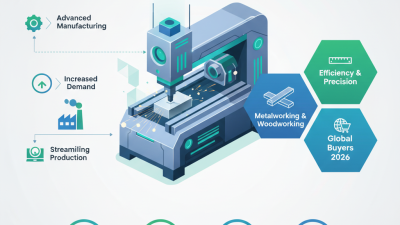
| 2026 Market Data | Demand drivers | The main measurable demand drivers are labor-cost pressure, higher consistency requirements, expansion of automated fabrication, shorter production cycles, worker-safety objectives, and reshoring or regionalization of manufacturing. | Machines that support unattended loading, quick changeover, and process monitoring are generally more attractive to high-volume users. | Qualitative 2026 outlook based on established manufacturing automation drivers. |
| 2026 Market Data | Regional buying priorities | Industrial buyers in mature manufacturing markets commonly prioritize repeatability, integration, traceability, energy efficiency, safety compliance, and service response. Buyers in developing production markets often place greater emphasis on purchase cost, ease of maintenance, and flexible part handling. | The “best” machine is determined by total cost of ownership and local support, not by purchase price alone. | Regional tendencies are general planning observations and should be validated with local users. |
| Operating Cost | Total cost of ownership | Key cost items include tooling, abrasives, electricity, compressed air, coolant, chip disposal, preventive maintenance, spare parts, labor, downtime, and training. | A lower initial price can result in a higher long-term cost if tool life, uptime, or serviceability is poor. | Compare costs over the planned service life using the same production assumptions. |
| Selection | Minimum buyer specification | Define workpiece material, dimensions, chamfer angle, chamfer width, tolerance, surface finish, cycle time, batch size, loading method, power supply, extraction needs, and acceptance-test criteria. | A complete specification prevents mismatches between machine capacity and actual production requirements. | The final selection should be confirmed through sample-part testing and documented performance results. |
Note: Technical ranges in this table are indicative planning benchmarks. Actual performance depends on machine design, tooling, workpiece geometry, material condition, automation configuration, and operating practices.