Leave Your Message
Choosing a Metal Grinding Machine in 2026 requires more than comparing prices, motor ratings, and attractive specifications. The correct choice begins with the workpiece. Consider its material, dimensions, hardness, surface-finish target, and production volume. A hardened steel shaft may need different wheel control than a thin aluminum component. Small details matter.
Dr. Stephen Malkin, a respected grinding-process researcher, has emphasized, “Grinding is a complex process involving many variables.” That observation remains practical today. Wheel speed, feed rate, coolant delivery, spindle stability, and dressing frequency can all change the final result. A powerful machine is not automatically a suitable machine. It may create heat marks, chatter, excessive wheel wear, or unnecessary energy costs.
Look closely at the workshop itself. Measure available floor space. Check electrical capacity. Inspect ventilation and coolant-handling arrangements. Ask whether operators can safely access the work area and adjust controls without awkward movement. Review real maintenance records, not only brochures. Supplier training and spare-parts availability also deserve attention.
Performance must be measurable.
This guide compares the main machine types, control systems, abrasive options, and safety features available for modern workshops. It also considers total ownership cost, including tooling, downtime, inspection, and operator learning. Some recommendations may seem conservative. That is intentional. Grinding decisions often fail through small assumptions, such as ignoring coolant cleanliness or selecting capacity far beyond the actual workload. A careful evaluation will not eliminate every risk, but it can expose weak choices before money, material, and production time are lost.
In 2026, choosing a metal grinding machine starts with the part, not the machine’s advertised power. Grand View Research estimated the global metal grinding machines market at more than USD 5 billion in 2023, with steady growth through 2030. However, market figures vary between reports because product categories differ. Treat them as direction, not proof.
Start with the part. Bench grinders suit deburring, sharpening, and small repair work. Belt grinders remove stock quickly and leave a directional finish. Surface grinders create flat, accurate faces, while cylindrical grinders process external or internal round surfaces. Centerless grinders support high-volume production without holding each workpiece between centers. Tool-and-cutter grinders handle complex cutting edges, but they demand stronger operator knowledge. Not always.
A practical selection check uses four details: material hardness, required tolerance, production volume, and surface finish. For hardened steel, confirm wheel compatibility, spindle speed, coolant control, and dressing access. ISO 16089 identifies key safety requirements for stationary grinding machines, including guarding and safe operating conditions. The U.S. Bureau of Labor Statistics continues to record serious hand and eye injuries across metalworking activities, so guarding and extraction deserve measurable attention. A machine that cuts quickly but vibrates can waste more metal than it saves. I would also question impressive accuracy claims. Actual results depend on fixturing, wheel condition, operator training, and maintenance records.
A practical comparison of common metal grinding machine types, operating characteristics, suitable applications, and selection criteria.
| Machine Type | Primary Grinding Method | Typical Workpiece or Application | Main Strengths | Important Limitations | Typical Accuracy Range* | Key Selection Factors |
|---|---|---|---|---|---|---|
| Bench Grinder | Two abrasive wheels rotate on a fixed spindle while the operator guides the workpiece by hand. | Deburring, edge preparation, sharpening tools, and removing small amounts of material from short parts. | Compact footprint, relatively low purchase cost, simple operation, and fast access for maintenance work. | Limited dimensional control; unsuitable for long, heavy, or precision-critical workpieces. | Approximately ±0.10–0.50 mm, depending on operator control and workpiece geometry. | Wheel diameter, motor power, spindle speed, tool-rest rigidity, wheel guard design, and emergency-stop provisions. |
| Belt Grinder | An abrasive belt runs continuously over contact wheels or a platen to remove and finish material. | Weld blending, radiusing, deburring, surface finishing, and shaping stainless steel, carbon steel, and aluminum. | Fast stock removal, flexible contact geometry, relatively cool cutting when correctly set up, and easy abrasive-belt changes. | Belt wear affects consistency; excessive pressure or incorrect grit selection can generate heat and visible scratches. | Approximately ±0.10–0.30 mm for manual work; tighter results require fixtures or automated control. | Belt width and length, belt speed, contact-wheel hardness, tracking stability, dust extraction, and available abrasive grits. |
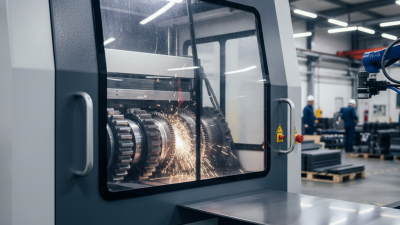
| Surface Grinder | A grinding wheel removes material from the surface of a workpiece mounted on a reciprocating or rotary table. | Flat plates, dies, fixtures, machine components, and hardened parts requiring controlled flatness and parallelism. | High surface quality, good flatness control, and accurate removal of small amounts of material. | Primarily suited to accessible flat surfaces; setup and magnetic chuck cleaning require care. | Commonly about ±0.005–0.025 mm; achievable accuracy depends on machine condition, setup, and thermal stability. | Table size and travel, spindle power, wheel diameter, magnetic or vacuum chuck, coolant system, and dressing method. |
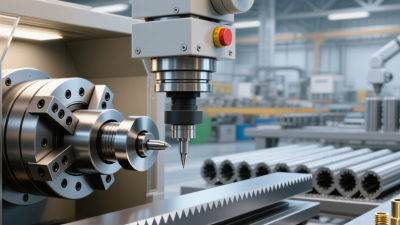
| Cylindrical Grinder | The workpiece rotates while a grinding wheel travels along or into its external cylindrical surface. | Shafts, pins, bearing seats, journals, sleeves, and other external round components. | Excellent control of roundness, diameter, concentricity, and surface finish on cylindrical parts. | Not suitable for irregular profiles without additional equipment; workholding and alignment are critical. | Commonly about ±0.005–0.020 mm for diameter, depending on machine configuration and process conditions. | Maximum grinding diameter and length, between-centers capacity, chuck capability, wheel width, automation, and coolant filtration. |
| Centerless Grinder | The workpiece is supported between a grinding wheel, regulating wheel, and work-rest blade without centers. | High-volume production of straight cylindrical parts such as pins, rods, bushings, and small shafts. | High throughput, continuous feeding capability, and efficient processing of large quantities of similar parts. | Setup is more complex; tapered, short, interrupted, or unusually shaped parts may require specialized arrangements. | Commonly about ±0.005–0.025 mm for diameter in stable production conditions. | Through-feed or in-feed configuration, part diameter range, regulating-wheel control, dressing accuracy, and automatic loading. |
| Internal Grinder | A small grinding wheel or spindle grinds the inside diameter of a bore or internal profile. | Bearing bores, sleeves, gears, hydraulic components, and precision holes in hardened materials. | Accurate internal diameters, good roundness, and fine surface finishes in relatively small or deep bores. | Wheel size limits access; spindle rigidity, coolant delivery, and chip evacuation become increasingly important in deep holes. | Commonly about ±0.005–0.025 mm for bore diameter, depending on bore size and process setup. | Bore diameter and depth, spindle speed, wheel diameter, workholding, coolant filtration, and in-process measurement. |
| Tool and Cutter Grinder | Abrasive wheels are positioned at controlled angles to sharpen or recondition cutting tools. | End mills, drills, reamers, milling cutters, inserts, and specialized cutting-tool geometries. | Supports tool regrinding, extends tool life, and can reproduce multiple cutting-edge geometries. | Requires skilled setup and inspection; universal models may have a steeper learning curve. | Approximately ±0.01–0.05 mm for many manual operations; tool geometry accuracy depends strongly on setup. | Tool diameter range, number of axes, spindle flexibility, collet system, optical or digital measurement, and software capability. |
| Gear Grinder | Specialized abrasive wheels generate or finish gear teeth to improve profile, lead, pitch, and surface quality. | Precision gears, splines, transmission components, and aerospace or industrial drive parts. | High gear-tooth accuracy, reduced noise potential, and fine surface finish after heat treatment. | High capital cost, specialized tooling, longer setup requirements, and limited versatility outside gear components. | Often capable of approximately ISO 5–8 gear quality, depending on machine type, workpiece, and process control. | Gear diameter, module or diametral pitch, tooth profile, helix angle, required gear quality, dressing system, and inspection equipment. |
| Creep-Feed Grinder | A deep cut is made at a slow table feed, usually with a specially dressed abrasive wheel and abundant coolant. | Complex profiles, turbine components, hardened dies, slots, and difficult-to-machine alloys. | Can remove substantial material in one pass while producing accurate profiles and reducing secondary operations. | High power and coolant demands; wheel loading, thermal control, and machine rigidity are important. | Approximately ±0.01–0.05 mm, depending on profile complexity and process parameters. | Spindle power, table travel, coolant flow and filtration, wheel specification, dressing capability, and thermal stability. |
| CNC Grinding Machine | Computer-controlled axes regulate wheel movement, workpiece rotation, dressing, and, in some systems, measurement. | Repeat production of precision external, internal, surface, profile, or combined grinding operations. | Repeatability, programmable compensation, reduced manual intervention, and suitability for complex production sequences. | Higher initial investment; programming, probing, fixturing, and preventive maintenance require trained personnel. | Commonly about ±0.003–0.020 mm, depending on machine type, workpiece, and process control. | Number of controlled axes, software functions, probing, automation compatibility, spindle configuration, and service support. |
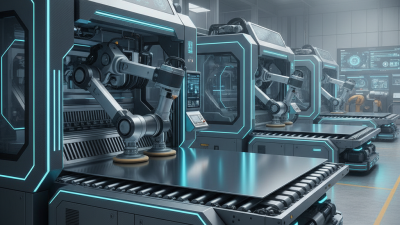
| Robotic or Automated Grinding Cell | A robot or automated handling system presents parts to grinding, belt, or finishing equipment using programmed paths. | Repetitive deburring, weld grinding, casting cleanup, and finishing of medium- to high-volume parts. | Improves operator safety and consistency while supporting continuous production and ergonomic improvement. | Initial integration is complex; part variation, fixturing, programming, and sensor feedback affect results. | Typically about ±0.10–0.50 mm for material removal unless closed-loop measurement is added. | Part repeatability, robot payload and reach, end-of-arm tooling, force control, vision or scanning, guarding, and cycle time. |
*Accuracy figures are general engineering ranges rather than guaranteed specifications. Actual performance depends on machine condition, workholding, abrasive selection, material, operator skill, thermal control, dressing, coolant, and measurement practice.