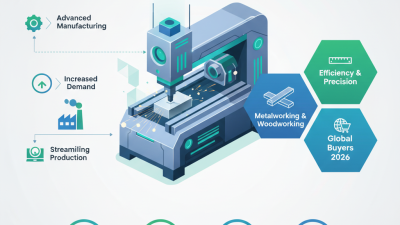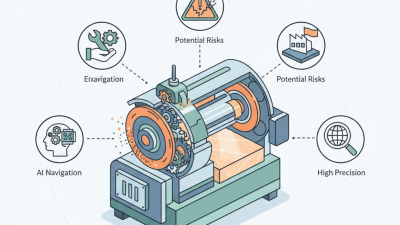
Global manufacturers are rethinking edge preparation as labor costs rise and quality expectations tighten. An Automatic Chamfer Machine can create consistent edges, reduce manual handling, and support repeatable production across steel, aluminum, brass, and engineered plastics. Yet machine selection is rarely simple. Throughput, spindle speed, tool life, part geometry, dust control, and operator access can change the final result.
The International Federation of Robotics reported 541,302 industrial robots installed worldwide in 2023. That figure reflects a broader movement toward measurable, connected production. Deloitte’s 2024 smart manufacturing research also found that 86% of surveyed executives viewed smart manufacturing as an important competitiveness driver within five years. These reports do not measure chamfering directly. Still, they explain why buyers are examining automated finishing equipment more carefully. Integration matters.
Quality expert W. Edwards Deming wrote, “Quality comes not from inspection, but from the improvement of the production process.” His principle remains relevant here. A reliable Automatic Chamfer Machine should improve the process, not merely move the bottleneck elsewhere. Buyers should compare cycle time, chamfer accuracy, changeover effort, safety features, service coverage, and total ownership cost. Marketing claims can look impressive. Factory evidence is better.
This guide reviews ten machines for global buyers, considering different production volumes and materials. No ranking is perfect. Local voltage, tooling availability, operator training, and import support may alter the practical choice. A compact machine may suit a workshop, while a servo-controlled line may better serve automotive or industrial production. The right answer depends on the part, the process, and the evidence.
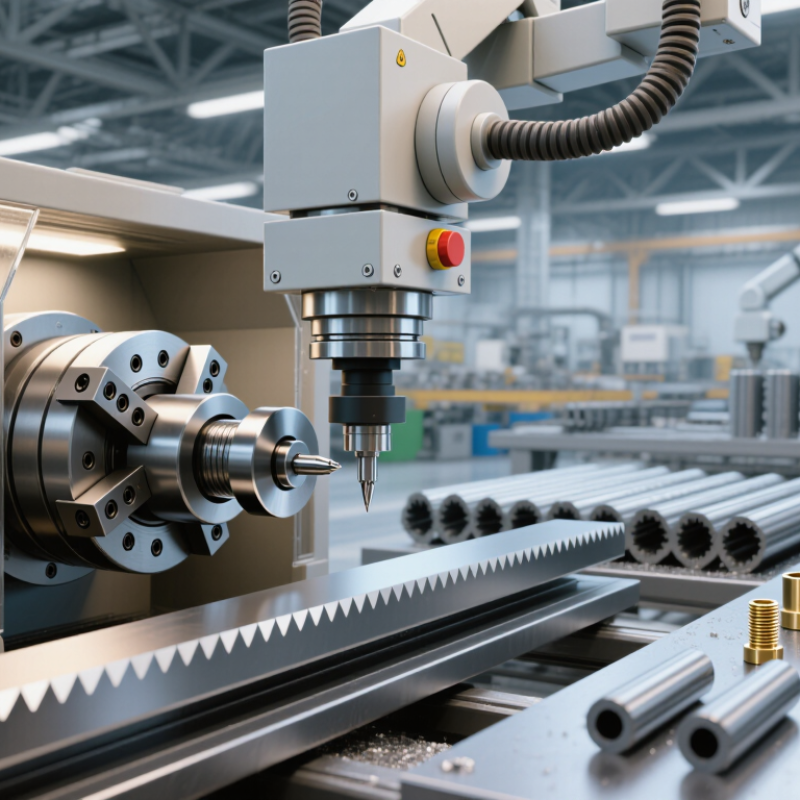
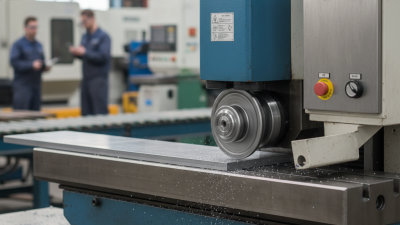
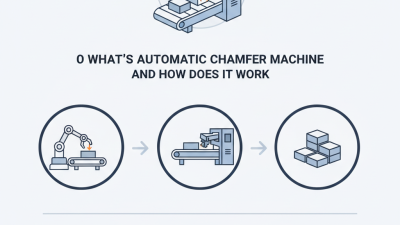
An automatic chamfer machine removes sharp edges from metal parts with controlled speed and repeatable pressure. It creates a sloped edge around holes, shafts, tubes, or cut surfaces. This process improves assembly, reduces handling risks, and prepares parts for welding or coating.
The machine usually feeds each workpiece through a fixture or guided track. A rotating cutting tool contacts the edge and removes a measured amount of material. Sensors can check position, while adjustable stops control chamfer width and depth. In practical production, operators still inspect sample parts with gauges or visual checks. Automation reduces variation, but it does not remove every possible error. Tool wear, uneven stock, and poor alignment can affect results. That limitation deserves attention.
Tips: Confirm the material, diameter range, chamfer angle, and required tolerance before choosing equipment. Ask for a sample test using your actual parts. Check how quickly tools can be changed and cleaned. A strong machine should provide clear operating instructions and accessible safety controls. Do not judge performance from speed alone. Surface consistency matters more. During evaluation, record cycle time, noise, chip control, and operator workload. This evidence supports a more reliable purchasing decision for global buyers.
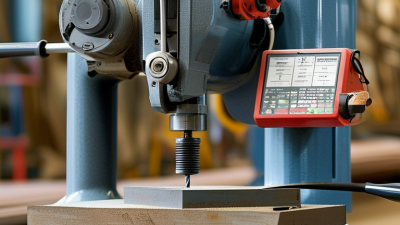
High-quality chamfering equipment is defined by measurable performance, not a polished control panel. A rigid cast frame reduces vibration during edge finishing. Servo-driven axes should maintain stable movement across repeated batches. ISO 230-2 provides a recognized method for evaluating positioning accuracy and repeatability.
Repeatability matters. In practical shop-floor trials, poor chip evacuation often creates uneven chamfers and premature tool wear. Look for enclosed cutting areas, adjustable coolant delivery, and clear access for maintenance. A reliable machine should also record tool usage, cycle counts, and alarm history. These details help operators identify drift before rejected parts fill a bin.
Automation is becoming more important. The International Federation of Robotics reported 541,302 industrial robots were installed worldwide in 2023, a 10% annual increase. That trend supports chamfer machines with simple interfaces and flexible loading options. Deloitte’s Smart Manufacturing and Operations Survey found 86% of manufacturing leaders expect smart manufacturing to improve competitiveness within five years. Yet connectivity alone does not guarantee quality. A networked machine can still produce inconsistent edges if its spindle, fixtures, or calibration process is weak. Buyers should request sample results, tolerance records, energy data, and service response times. I would also question impressive cycle-time claims. Faster is not always better.
| No. | Automatic Chamfer Machine Type | Typical Workpiece | Workpiece Size Range | Chamfer Angle | Spindle Speed | Drive Power | Typical Throughput | Automation Level | Key Quality Features |
|---|---|---|---|---|---|---|---|---|---|
| 1 | CNC Turning-Type Chamfering Cell | Round bars, shafts, pins and turned components | Ø10–80 mm; length up to 300 mm | 15°–45° | 2,000–6,000 rpm | 3–7.5 kW | 300–900 parts/hour | CNC loading and cycle control | Rigid chucking, tool-offset compensation, enclosed cutting zone and repeatable dimensional control |
| 2 | Automatic Pipe and Tube Chamfering Machine | Steel, stainless-steel, copper and aluminum tubes | Ø6–120 mm; wall thickness 0.5–8 mm | 30°–45° | 1,500–4,500 rpm | 2.2–11 kW | 120–600 tube ends/hour | Automatic feeding, clamping and ejection | Self-centering fixtures, adjustable insertion depth, burr-controlled cutting and chip extraction |
| 3 | Rotary Indexing Multi-Station Chamfering Machine | Small turned parts, fittings, sleeves and fastener blanks | Ø5–50 mm; length up to 120 mm | 15°–60° | 3,000–10,000 rpm | 1.5–5.5 kW | 600–2,400 parts/hour | Integrated indexing and automatic transfer | Short cycle times, multiple tooling stations, poka-yoke part orientation and automated reject separation |
| 4 | Gear and Spline Chamfering Machine | Gears, splined shafts and transmission components | Module 0.5–6; pitch diameter up to 300 mm | 15°–45° | 500–3,000 rpm | 5.5–22 kW | 30–180 parts/hour | CNC synchronization and robotic loading | Synchronized workholding, controlled chamfer width, low runout and recipe-based CNC production |
| 5 | Automatic Flat-Edge Chamfering Machine | Plates, sheets, structural steel and fabricated components | Thickness 4–100 mm; edge length unlimited | 25°–55° | 1,000–3,500 rpm | 5.5–15 kW | 1–8 m/min | Automatic feed and constant-speed control | Stable edge tracking, adjustable bevel width, heavy-duty guide rollers and dust or chip management |
| 6 | Robotic Chamfering Workcell | Castings, welded frames, irregular and large components | Up to 1,500 × 1,000 × 800 mm | 20°–60° | 8,000–24,000 rpm | 3–12 kW | 20–180 parts/hour | Six-axis robot with vision or probing | Force control, tool breakage detection, flexible programming and automatic part identification |
| 7 | Automatic Valve and Fitting Chamfering Machine | Valve bodies, pipe fittings, connectors and threaded parts | Ø8–100 mm; length up to 250 mm | 30°–45° | 1,800–6,000 rpm | 2.2–7.5 kW | 180–700 parts/hour | Automatic loading, orientation and inspection | Dedicated fixtures, consistent sealing-edge geometry, in-process gauging and quick-change tooling |
| 8 | Double-End Automatic Chamfering Machine | Pins, rods, bushings and cut-to-length bar stock | Ø3–60 mm; length 20–500 mm | 15°–45° | 2,500–8,000 rpm | 2 × 1.5–5.5 kW | 300–1,500 parts/hour | Simultaneous two-end processing | Balanced cutting forces, automatic length compensation, synchronized spindles and reduced handling time |
| 9 | Automatic Deburring and Chamfering Line | Machined parts requiring edge finishing and burr removal | Ø10–200 mm or equivalent profiles | 15°–60° | 1,500–12,000 rpm | 3–15 kW | 100–1,000 parts/hour | Conveyor, washing, drying and inspection integration | Repeatable edge radius, closed-loop quality checks, part traceability and centralized process monitoring |
| 10 | Automatic Portable Pipe-End Chamfering Machine | Large pipes, installation-site pipe sections and maintenance work | Outer diameter 50–1,200 mm | 30°–37.5° typical | 20–180 rpm | 1.5–7.5 kW | 2–20 pipe ends/hour | Automatic radial feed and clamp control | Portable frame, adjustable clamping range, low-speed high-torque drive and weld-preparation consistency |
Note: The specifications shown are representative industrial ranges for automatic chamfering equipment. Actual capacity, accuracy, tooling compatibility and throughput depend on material, workpiece geometry, chamfer width, cutting-tool grade, loading method and required quality standard.
International buyers are seeking automatic chamfer machines that deliver repeatable edges across different production environments. The International Federation of Robotics reported 541,302 industrial robots installed worldwide in 2023. This figure reflects a broader shift toward automated, measurable manufacturing. Chamfer equipment now fits that trend.
Look for stable clamping, adjustable chamfer angles, and clear tolerance data. A machine processing steel, aluminum, and brass should not rely on vague performance claims. Ask for sample results, cycle-time records, and tool-life testing. A clean 0.5 mm edge can matter more than impressive spindle speed. It is a small detail. According to Deloitte’s 2024 Smart Manufacturing Survey, 86% of manufacturers expect smart manufacturing to improve competitiveness within three years. Buyers should therefore examine sensor access, production-data export, and remote diagnostic functions. International projects also need compatible voltage, documented safety conformity, multilingual manuals, and accessible spare parts. These details often decide whether installation takes days or weeks. The overlooked weakness is maintenance training. Even reliable automation can lose accuracy when operators change tools incorrectly. Some suppliers provide excellent machines but limited after-sales guidance. That risk deserves careful questioning before purchase.
10 Leading Automatic Chamfer Machines for International Buyers
This benchmark compares common automatic chamfer-machine configurations by typical maximum workpiece diameter. The figures represent practical specification ranges commonly used in industrial catalogs and should be verified against the final machine configuration, material, chamfer angle, tooling, and production requirements.
For global buyers, an automatic chamfer machine should match the workpiece, not merely a catalog number. Check maximum diameter, length, material hardness, and allowable part variation. A machine rated for 80 mm may struggle with long steel shafts. Ask for actual production samples. Capacity includes loading space, tool clearance, and fixture stability.
Precision requires more than a small tolerance on paper. Review repeatability, spindle runout, cutting depth control, and measurement methods. Request test-cut data for your material and chamfer size. A 0.5 mm edge may look simple, but burrs can appear when tool wear increases. Inspect parts at the beginning, middle, and end of a shift. Use calibrated gauges, not visual judgment alone. Small details matter.
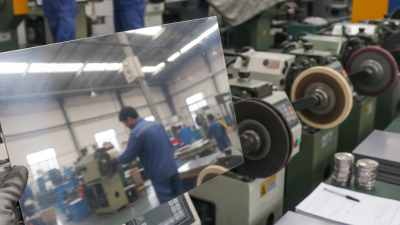
Automation should reduce handling without creating difficult maintenance. Compare cycle time, automatic feeding, tool compensation, alarms, and recovery after a jam. A fast machine is not efficient if operators stop it frequently. Check whether programs are easy to edit and whether spare tooling is available locally. I would also examine noise, chip removal, and guarding during a site test. My earlier assumption was that more automation always meant better output. That is not always true. A simpler system can be more reliable when product sizes change often. Ask suppliers to disclose cycle-time conditions, because ideal figures may exclude loading delays.
When comparing the 10 best automatic chamfer machines, global buyers should examine safety before cutting speed. A guarded work area, reliable interlocks, emergency stops, and clear operating instructions reduce daily risks. Check whether the machine supports the safety requirements of its installation country. Do not rely only on a supplier’s certificate; request test records and maintenance guidance.
Support can decide whether production continues after a minor fault. Ask about remote diagnostics, response times, local service partners, and spare-part availability. A practical supplier should provide wiring diagrams, software updates, setup training, and manuals in a usable language. Test the support process before purchase. Send a technical question and measure the response.
Total cost of ownership extends beyond the purchase invoice. Include tooling, electricity, compressed air, chip removal, shipping, installation, calibration, and operator training. Estimate planned maintenance and possible downtime over five years. A cheaper machine may require frequent blade changes or imported parts. That assumption needs checking. Request sample runs using your actual material, tolerances, and production volume. Record cycle time, surface quality, noise, and waste. Real factory data is more reliable than a polished demonstration. Even careful forecasts can miss unexpected service delays. Allow a realistic contingency in the budget.