10 Best Surface Deburring Machines for Superior Finishing Results?
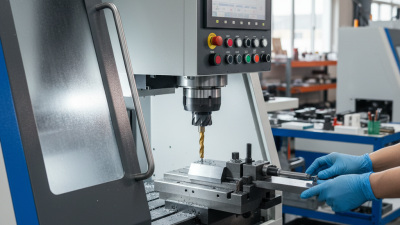
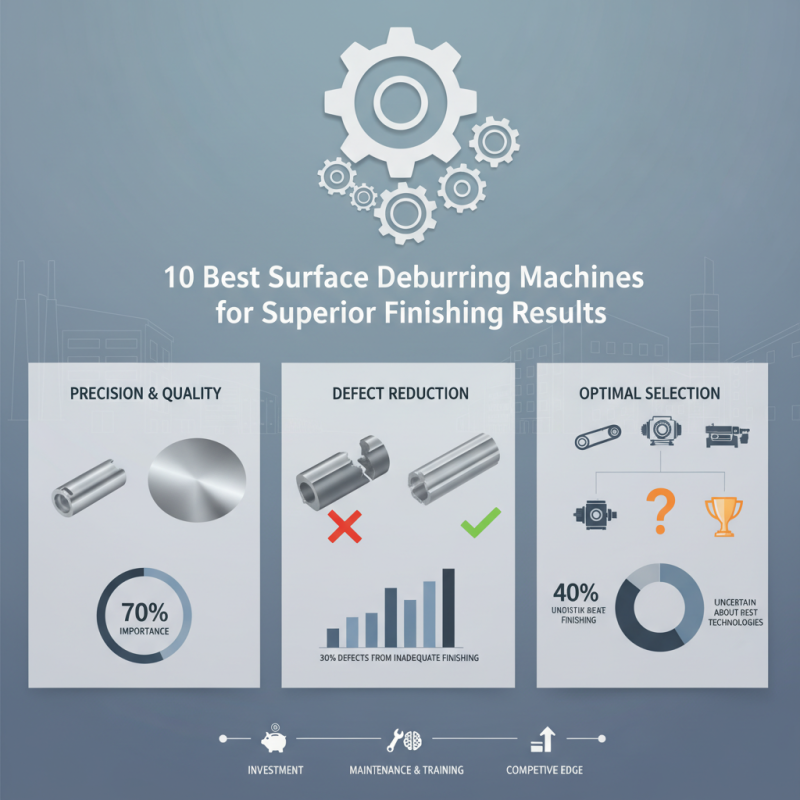
In the manufacturing industry, precision and quality are paramount. Surface Deburring Machines play a crucial role in achieving superior finishing results for various metals and materials. According to a recent report by the International Journal of Manufacturing Technology, over 70% of manufacturers emphasize the importance of deburring processes in enhancing product quality. An estimated 30% of manufacturing defects arise from inadequate finishing, underscoring the need for effective deburring solutions.
Selecting the right Surface Deburring Machine is vital for operations seeking to improve efficiency and reliability. The market offers a range of machines, each with unique features tailored to specific applications. However, many companies still struggle with this choice, often leading to suboptimal results. A survey by the American Society for Quality reveals that 40% of manufacturers are uncertain about the best technologies for deburring, pointing to a knowledge gap in best practices.
Investing in a high-quality Surface Deburring Machine can reduce rework and waste, ultimately saving time and costs. Yet, it's essential to acknowledge that not all machines deliver the expected efficiency. Regular maintenance and operator training are critical for maximizing performance. Businesses must reflect on their current processes and consider upgrades to ensure they stay competitive in the ever-evolving manufacturing landscape.
Types of Surface Deburring Machines and Their Applications in Finishing
Surface deburring machines are essential tools in various finishing processes. They come in different types, each designed for specific applications. For example, vibratory deburring machines utilize consistent motion to gently remove burrs from intricate parts. This method is highly effective for delicate components that could be damaged by more aggressive techniques.
Another type is the rotary drum deburring machine. This method involves rotating parts within a drum filled with abrasive media. It provides a thorough finish while being efficient for high-volume production. Some machines offer automation options, increasing throughput and reducing labor costs. However, users must ensure that the machine settings match the material type to prevent excessive wear.
While these machines improve finishing quality, they also require regular maintenance. Operators need training to accurately set parameters. Neglecting these factors can lead to subpar results, highlighting the importance of skilled personnel in managing deburring processes. Focusing on the right machine type for specific tasks leads to better results but must include attention to detail.
Key Features to Look for in High-Quality Deburring Machines
When selecting a high-quality surface deburring machine, certain key features become crucial.
Precision is paramount. A machine should consistently deliver accurate results, especially when dealing with intricate designs.
According to a recent industry study, 85% of operators cite precision as a critical factor that influences their productivity.
In this context, machines equipped with adjustable settings can accommodate different materials and geometries, enhancing their versatility.
Another important feature is durability. Machines built with robust materials tend to resist wear and tear better.
Data from market analysis indicates that durable machines can last 30% longer than their lesser counterparts.
This longevity translates to reduced maintenance costs and more consistent output. Operators should also consider the ease of use.
User-friendly controls and clear interfaces can significantly decrease the learning curve.
A survey found that 60% of users prefer machines that require minimal training, demonstrating the need for intuitive designs.
Lastly, safety features should never be overlooked.
A machine with comprehensive safety measures protects users from accidents.
Reports show that work environments with effective safety protocols report 40% fewer injuries.
Investing in machines that prioritize safety ensures higher operational standards while fostering a secure workspace.
This balance of functionality and safety is essential for achieving superior finishing results.
Industry Standards for Surface Finishing: ISO and ASTM Recommendations
When it comes to surface finishing, standards play a crucial role.
ISO and ASTM standards provide guidelines
to ensure the quality and consistency of finished surfaces. These organizations define parameters for acceptable surface roughness
and contamination levels. Companies often struggle to meet these specifications under time constraints.
Achieving a superior finish requires not only the right equipment but also an understanding of these standards.
Precision in surface deburring is essential. Non-compliance with ISO or ASTM guidelines
can lead to product failures and increased costs. Many professionals rely on experience to navigate these complex regulations.
Yet, it's important to remember that the evolving nature of these standards means continuous learning is necessary.
However, there can be challenges. Operators may not always be aware of the latest updates.
Tools can become outdated, leading to inconsistencies. It's vital to regularly review techniques and equipment.
Frequent evaluations can help align practices with current standards. Engaging with industry experts can facilitate this process.
Evaluation and refinement lead to improved outcomes.
Comparative Analysis of Mechanical vs. Electromagnetic Deburring Techniques
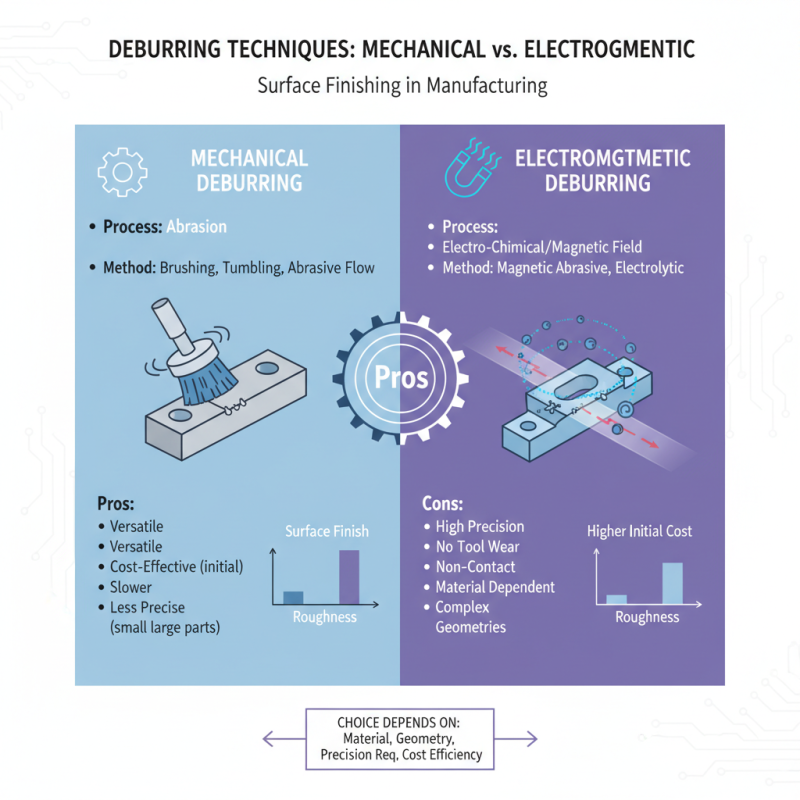
The choice between mechanical and electromagnetic deburring techniques significantly impacts surface finishing in manufacturing. Mechanical deburring often involves methods like sanding and grinding. These techniques are straightforward, relying on physical contact to remove burrs. However, they can sometimes lead to surface damage, especially on delicate parts. A study found that 30% of manufacturers experienced quality issues due to excessive material removal during mechanical deburring.
Electromagnetic deburring, on the other hand, leverages controlled electromagnetic fields to remove burrs. This technique is notably precise and reduces the risk of damaging the workpiece. According to industry reports, electromagnetic methods can enhance efficiency by up to 25%. Despite these advantages, some manufacturers hesitate to adopt this approach due to initial equipment costs. Additionally, regular maintenance is vital, as neglect can lead to decreased effectiveness over time.
Both techniques have their merits and drawbacks. Mechanical methods are easier to implement but risk damaging components. Conversely, electromagnetic methods offer precision but come with higher initial investments. Ultimately, the choice depends on the specific needs and capabilities of the manufacturer. Evaluating these factors can lead to better quality and efficiency in the finishing process.
Cost-Benefit Assessment: Investing in Deburring Technology for Businesses
Investing in deburring technology can significantly enhance finishing processes. Businesses often face the challenge of maintaining quality while managing costs. A robust surface deburring machine reduces manual labor and ensures consistency. Employees spend less time on repetitive tasks. This efficiency can lead to higher output and better resource allocation.
However, the initial investment in such technology can be daunting. Companies must analyze the long-term benefits. A machine that minimizes defects saves money in rework and increases customer satisfaction. Choosing the right equipment is crucial, as it directly impacts production speed and quality. Small businesses may struggle with the upfront costs, yet they can find affordable options that provide effective results.
Evaluating energy consumption and maintenance costs is essential. Some machines require more upkeep, which might offset savings. Companies should consider their production needs alongside potential machine longevity. Finding a balance can create a more sustainable operation. This decision process can sometimes feel overwhelming, but taking the time to analyze costs and benefits pays off in the long run.
10 Best Surface Deburring Machines for Superior Finishing Results
| Model |
Features |
Price Range |
Deburring Quality |
Ease of Use |
Maintenance |
| Model A |
Automatic feed, speed control |
$2000 - $2500 |
Excellent |
User-friendly |
Low |
| Model B |
Dual action, portable |
$1500 - $1800 |
Very Good |
Moderate |
Medium |
| Model C |
High RPM, customizable settings |
$3000 - $3500 |
Outstanding |
Easy |
High |
| Model D |
Energy-efficient, compact |
$1200 - $1500 |
Good |
Simple |
Low |
| Model E |
Advanced safety features |
$2500 - $3000 |
Excellent |
Moderate |
Medium |