What is a Belt Sanders Sander Machine and How to Choose?
In the world of woodworking, a Belt Sanders Sander Machine stands out as a crucial tool for both hobbyists and professionals. Renowned expert John Smith, a master craftsman with over 20 years of experience, emphasizes, “A quality belt sander can transform rough lumber into a smooth canvas for your projects.” His insight highlights the importance of this machine in achieving outstanding finishes.
Choosing the right Belt Sanders Sander Machine can significantly impact the quality of your work. Factors such as power, belt speed, and weight play vital roles in performance. A powerful motor helps in sanding tougher materials, while adjustable speeds allow for greater control. However, finding a machine that balances these features can be challenging. Some users may feel overwhelmed by the plethora of options available.
It's also important to consider your specific needs. Are you a beginner, or do you have years of experience? The answer can guide your decision. A common pitfall is overpaying for features you may never use. Thus, reflecting on your sanding requirements is key. Investing time in research ensures you choose a Belt Sanders Sander Machine that truly meets your demands.

What is a Belt Sanders Sander Machine?
A belt sander is a powerful tool designed for smoothing surfaces and shaping wood. It features a continuous loop of sandpaper that moves rapidly over a workpiece. This machine is perfect for large areas, like tabletops or doors. It quickly removes material, allowing for efficient sanding. The belt sander can be adjusted for different grit levels, impacting the finish quality. Sandpaper grits from coarse to fine serve specific tasks, from heavy material removal to a smooth finish.
Operating a belt sander requires practice and precision. Misuse can lead to gouges or uneven surfaces. Beginner users may find it challenging to control the speed. A steady hand is crucial. It’s also important to understand how to handle different materials. Some woods may splinter or tear. Take time to experiment and adjust your technique based on the wood type. Regular maintenance of the sander is essential for longevity. Replacing worn belts timely ensures optimal performance.
While belt sanders are effective, they can be overwhelming for newcomers. Having a firm grip and maintaining balance are vital. Consider safety precautions like goggles and masks. Dust can be harmful, so proper ventilation is key. It’s valuable to reflect on your work approach and seek improvements continuously. Engaging with other woodworkers can provide insights and tips. Experience builds confidence, enhancing the quality of your projects over time.
Belt Sanders Performance Comparison
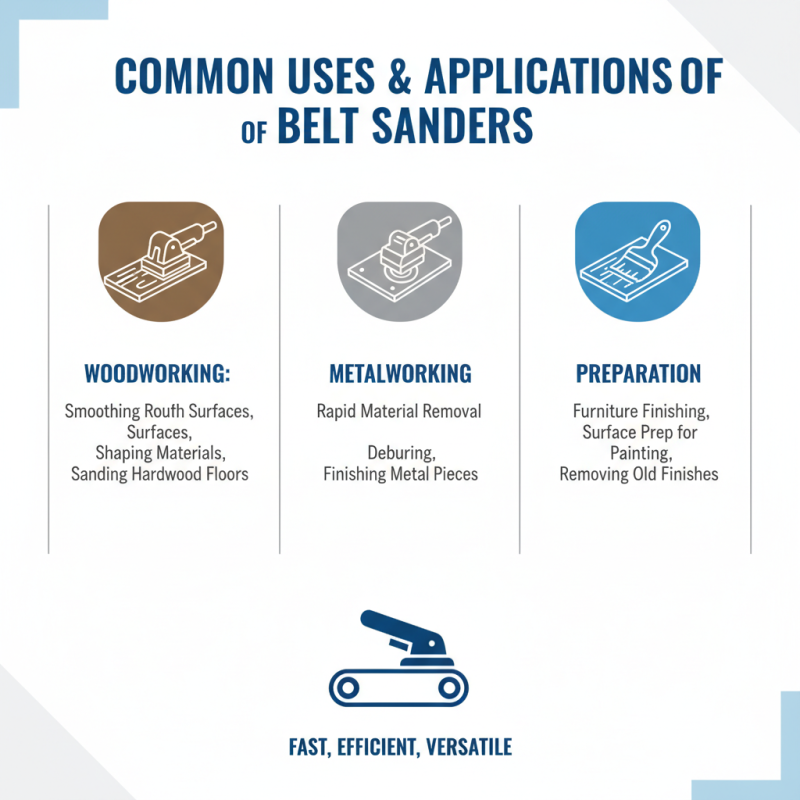
Common Uses and Applications of Belt Sanders
Belt sanders are versatile tools widely used in woodworking and metalworking. These machines excel at smoothing rough surfaces and shaping materials. They operate with a continuous loop of sandpaper, which allows for efficient and quick material removal. The speed and power of a belt sander make it ideal for large areas. It's commonly used for sanding hardwood floors, finishing furniture, and preparing surfaces for painting.
When using a belt sander, ensure you have the correct grit for your project. Coarse grits are suitable for heavy material removal. Finer grits create a smooth finish. It's essential to move the sander in a consistent direction to avoid swirl marks.
Tips: Always secure your material. A stable surface prevents accidents and enhances sanding quality. Don’t rush the process; give your tool enough time to do its job. Pay attention to how the machine feels in your hands. If it vibrates excessively, check for wear or misalignment. Proper maintenance can extend the life of your sander, so replace worn belts promptly.
Belt sanders are also useful in crafting projects. Builders often use them for shaping edges and contouring surfaces. However, inexperienced users may struggle with control. Practice makes perfect; take time to get a feel for the machine. Keep safety gear on hand, like goggles and dust masks, to protect yourself from debris.
Types of Belt Sanders: An Overview
Belt sanders are versatile tools essential for woodworking and metalworking. There are various types of belt sanders, each designed for specific tasks. The most common types are stationary belt sanders and handheld models. Stationary sanders often have larger sanding belts and are ideal for heavy-duty tasks. Handheld options are more portable but may lack power.
According to industry reports, the global belt sander market is projected to grow at a CAGR of over 5% from 2023 to 2030. This growth is driven by increased demand in construction and renovation sectors. The right choice of a belt sander can significantly influence project outcomes. For instance, using a 3-inch belt for fine woodworking tasks allows for precision. Meanwhile, a 4-inch belt is better suited for removing material quickly.
Understanding the limitations of each type is crucial. Handheld sanders, while portable, can lead to uneven surfaces if not used properly. Stationary models require adequate space and might be overkill for small jobs. As a user, reflect on your specific needs. Evaluate the materials you often work with and choose a sander accordingly. Each type has strengths and weaknesses that could impact your work quality.
Factors to Consider When Choosing a Belt Sander
When choosing a belt sander, several factors come into play.
The sandpaper grit is crucial. Finer grits work well for finishing, while coarser grits
excel in material removal. Assess the work you'll be doing. A fine balance is key; too coarse can damage your material.
Too fine can lead to longer work times.
Another important aspect is the sander's speed. Variable speed options allow for
more control. Higher speeds can be useful for large areas, but they might be more challenging to manage on delicate surfaces.
Ensure you understand what you need. Do not underestimate the importance of weight and ergonomics.
A heavy sander might be durable, but it can become tiring to use over extended periods.
Consider the design and accessibility of the sander. Some models have a better dust collection system
than others. Effective dust management keeps your workspace clean and improves visibility. Occasionally, a sander can feel cumbersome
even if it is lightweight. Choosing the best belt sander requires you to reflect on your specific tasks and preferences.
Think practically about your needs before making a purchasing decision.
Maintenance Tips for Belt Sanders to Ensure Longevity
Belt sanders are powerful tools that require regular maintenance for optimal performance. Keeping the machine clean is essential. Dust and debris can clog the mechanism, affecting its efficiency. A simple air blower can help remove buildup from the sander’s housing and motor. Make sure to check the condition of the sanding belt frequently. Worn belts can lead to uneven sanding and may damage your workpiece.
Lubricating moving parts is crucial for longevity. Use appropriate lubricants on bearings and pulleys to prevent friction. Check for any loose screws or components. These small issues can become bigger problems if neglected. Regular inspections can prevent potential breakdowns. Keep an eye on the belt tension as well. Too loose or too tight can lead to belt wear and decreased performance.
Storing the belt sander properly also matters. Keep it in a dry place away from moisture. Exposure to water can rust the parts and shorten its lifespan. Consider using a protective cover. This helps shield the sander from dust and debris when not in use. Understanding these maintenance tips can significantly enhance the lifespan of your belt sander.
What is a Belt Sanders Sander Machine and How to Choose? - Maintenance Tips for Belt Sanders to Ensure Longevity
| Feature |
Description |
Maintenance Tip |
| Motor Power |
Measured in amps; higher amps mean more power for tough jobs. |
Regularly check the motor for dust build-up and clean as needed. |
| Belt Size |
Common sizes are 3"x21", 4"x24", and 4"x36"; choose based on your project needs. |
Replace belts frequently to maintain optimal performance. |
| Speed Settings |
Variable speed settings allow for different materials and finishes. |
Adjust speed according to the material to avoid burn marks. |
| Weight |
Heavier models can provide more stability but may cause fatigue. |
Consider ergonomic designs to reduce strain during extended use. |
| Dust Collection |
Built-in collection system helps keep workspace clean. |
Regularly empty the dust bag to maintain suction efficiency. |
| Price Range |
Belt sanders can range from $50 to $500 depending on features. |
Invest in quality for better durability and performance over time. |