2026 Top Trends in Surface Finishing Machines for Industrial Applications?
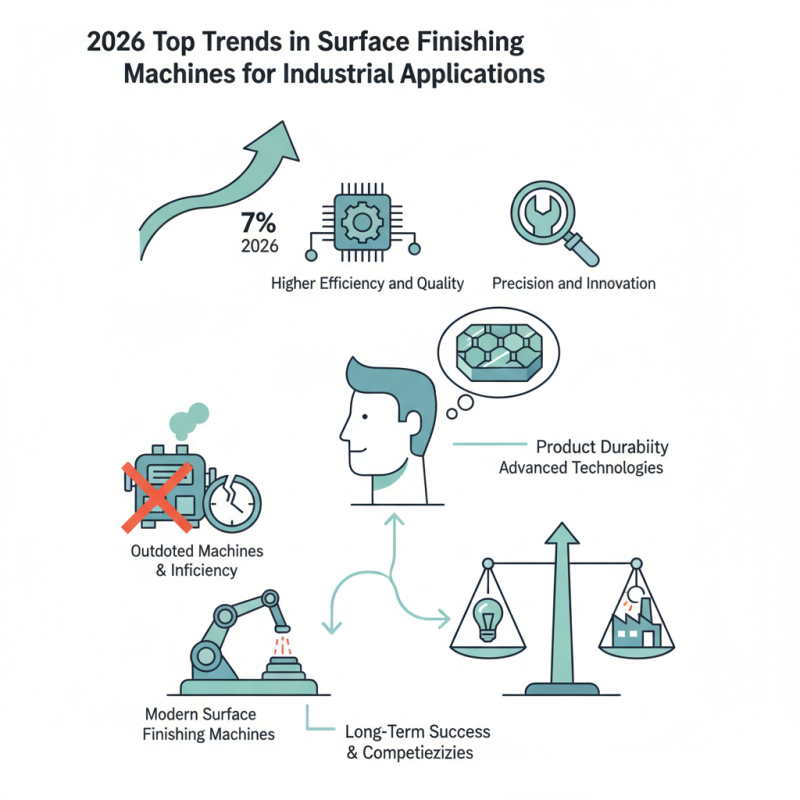
The landscape of surface finishing machines is evolving rapidly as industries strive for higher efficiency and quality. According to a recent report by the International Association of Surface Finishers, the market is projected to grow by 7% annually through 2026. This growth reflects the increasing demand for precision and innovation in manufacturing processes.
Experts like Dr. Robert S. Colvin, a leading figure in surface technology, emphasize, “Innovations in surface finishing machines are the key to enhancing product durability.” His insights highlight the necessity for manufacturers to adopt advanced technologies that optimize surface treatments.
However, the industry faces challenges as well. Many companies are still relying on outdated machines, leading to inefficiencies. Transitioning to modern surface finishing machines can be daunting but is essential for maintaining competitiveness. Balancing innovation with practicality is imperative for businesses aiming for long-term success in the industrial applications sector.
Emerging Technologies in Surface Finishing Machines for 2026
As industries evolve, surface finishing machines are integrating innovative technologies. By 2026, we can expect significant advancements that enhance efficiency and precision. The global surface finishing equipment market is projected to reach $10 billion by 2026, driven by the demand for high-quality finishes in sectors like automotive and aerospace.
One emerging trend is automation through AI and robotics. These technologies enable consistent results and reduce human error. A recent report indicated that automating surface finishing processes can improve productivity by up to 30%. However, businesses must ensure that their staff are adequately trained to operate these advanced systems.
Another notable development is environmentally friendly solutions. Water-based and biodegradable chemicals are gaining traction. This shift is driven by stringent regulations and a growing emphasis on sustainability. Yet, many companies struggle to fully adapt due to limited resources. They need to weigh the costs against potential long-term benefits.
Tips:
Always stay updated on market trends. Regular training for your team ensures smooth operation of new technologies. Evaluate the cost-effectiveness of adopting green solutions in your processes.
Sustainable Practices in Surface Finishing for Industrial Manufacturing
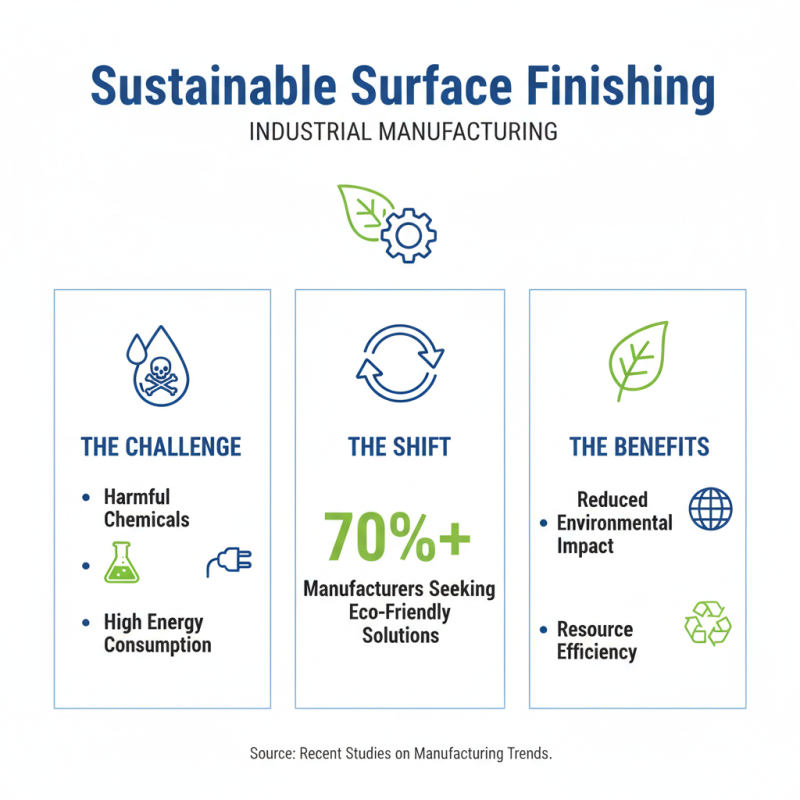
Sustainable practices in surface finishing are gaining momentum in industrial manufacturing. Recent studies indicate that over 70% of manufacturers are seeking eco-friendly solutions. Traditional processes often rely heavily on harmful chemicals and high energy consumption. Transitioning to sustainable practices can significantly reduce environmental impacts.
Innovative technologies are emerging that prioritize sustainability. Water-based coatings, for example, reduce volatile organic compounds (VOCs) and minimize air pollution. Additionally, more manufacturers are adopting closed-loop systems to recycle materials. These systems can lower waste by up to 40%, showcasing a shift toward circular economy principles.
Implementing these practices, however, comes with challenges. Some companies struggle to find the right balance between sustainability and cost-effectiveness. Adapting to new technologies requires initial investment and training. The path to greener manufacturing is not straightforward, but the potential benefits are profound. As the industry evolves, continuous reflection and improvement will be essential for long-term success.
Automation Trends Impacting Surface Finishing Equipment
The industrial landscape for surface finishing machines is rapidly evolving. Automation is becoming the cornerstone of this transformation. Advanced robotics and AI are streamlining processes, enhancing precision and efficiency. Automated systems can handle complex tasks, reducing manual labor and errors.
Monitoring and data collection have seen improvements. Real-time analytics allow operators to optimize workflows. This leads to increased output and consistent quality. However, transitioning to automation is not without challenges. Companies may face initial costs and the need for staff retraining. Understanding the balance between automation and human oversight is essential.
Tips: Integrate training programs for employees adapting to new automation technologies. Foster a culture of learning and adaptability. Regularly evaluate machine performance metrics to identify areas for improvement is crucial. Automation isn't a one-size-fits-all approach. Each company must assess its unique needs.
Enhanced Material Compatibility in Modern Surface Finishing Solutions
In recent years, the quest for enhanced material compatibility in surface finishing machines has become a focal point for industrial applications. As manufacturers pursue versatile solutions, they must consider the specific needs of diverse materials. Modern technologies now allow for better customization, enabling compatibility with metals, plastics, and composites. Factors such as temperature control and chemical resistance are crucial for optimal results.
Tips: Always assess material properties before selecting finishing solutions. Understand how different abrasive materials react with the substrates. Testing small samples can save time and resources.
Efficiency is also vital in surface finishing. Machines need to provide consistent finishes while minimizing waste. Some industries may overlook the impact of these factors, resulting in inconsistent product quality. Sustainable practices must be adopted, as waste reduction directly correlates with cost-effectiveness.
Tips: Regular maintenance of equipment can significantly improve performance. Routine inspections help identify potential issues. Consider utilizing predictive maintenance technologies to extend machine life and enhance output.
Market Drivers and Challenges for Surface Finishing Machines in 2026
The market for surface finishing machines is evolving rapidly. In 2026, the demand will be driven by automation and sustainability. Industries seek efficient solutions that reduce waste and energy consumption. According to a recent market report, the global surface finishing market is expected to reach $12 billion by 2026, growing at a CAGR of 6.5%. This indicates strong growth opportunities fueled by technological advancements.
However, challenges persist. The complexity of integrating new technologies into existing operations can create friction. Moreover, the skill gap in the workforce makes it difficult to adopt advanced surface finishing techniques. Manufacturers might struggle to balance adopting new methods while ensuring quality control. Additionally, fluctuating raw material costs could squeeze profit margins, requiring companies to innovate continuously.
As industries focus on sustainability, they face additional hurdles. Adopting eco-friendly materials and processes often requires significant investment. Some businesses may resist change due to the perceived risk versus reward. Industry leaders must navigate these difficulties to ensure long-term viability. Ultimately, successful players will be those who embrace evolving trends while addressing the inherent challenges.
2026 Top Trends in Surface Finishing Machines for Industrial Applications
| Trend |
Market Drivers |
Challenges |
Expected Growth Rate (%) |
| Increased Automation |
Rising labor costs and need for efficiency |
High initial investment costs |
12% |
| Sustainable Finishing Processes |
Stricter environmental regulations |
Transitioning from traditional methods |
10% |
| Smart Manufacturing Integration |
Industry 4.0 and IoT adoption |
Need for skilled workforce |
15% |
| Advanced Coating Technologies |
Demand for improved product longevity |
Research and development costs |
8% |
| Robust Quality Control Measures |
Need for compliance and quality assurance |
Implementation complexity |
10% |