China Top Grinding Polishing Machine Suppliers? This question deserves more than a factory list. Buyers need measurable evidence, practical experience, and transparent verification. A Grinding Polishing Machine must deliver stable surface finish, controlled material removal, and repeatable cycle times. Price alone cannot prove industrial value.
Market data shows why this decision matters. Grand View Research estimates the global metal finishing market will continue expanding through 2030, supported by automotive, aerospace, electronics, and medical manufacturing. MarketsandMarkets also projects steady growth in the global grinding machine market, driven by automation and demand for tighter tolerances. These reports use different market definitions, so their figures should not be compared mechanically. That is an important limitation.
Process capability matters more than impressive brochures. W. Edwards Deming, a renowned manufacturing quality expert, said, “Quality comes not from inspection, but from the improvement of the production process.” His principle fits supplier evaluation closely. Check spindle accuracy, abrasive compatibility, coolant control, automation options, and after-sales response. Request test pieces made from your actual material. Examine edge rounding under magnification. Measure roughness with calibrated equipment, not visual judgment.
Chinese suppliers vary significantly in engineering depth and documentation. Reliable candidates should provide ISO 9001 evidence, clear specifications, safety conformity documents, installation guidance, and verifiable customer references. A factory tour can reveal useful details, including assembly cleanliness, calibration records, and spare-parts organization. Still, one visit cannot prove long-term reliability. This guide may not create a perfect ranking. It aims to create a defensible shortlist for comparing China’s leading Grinding Polishing Machine suppliers.
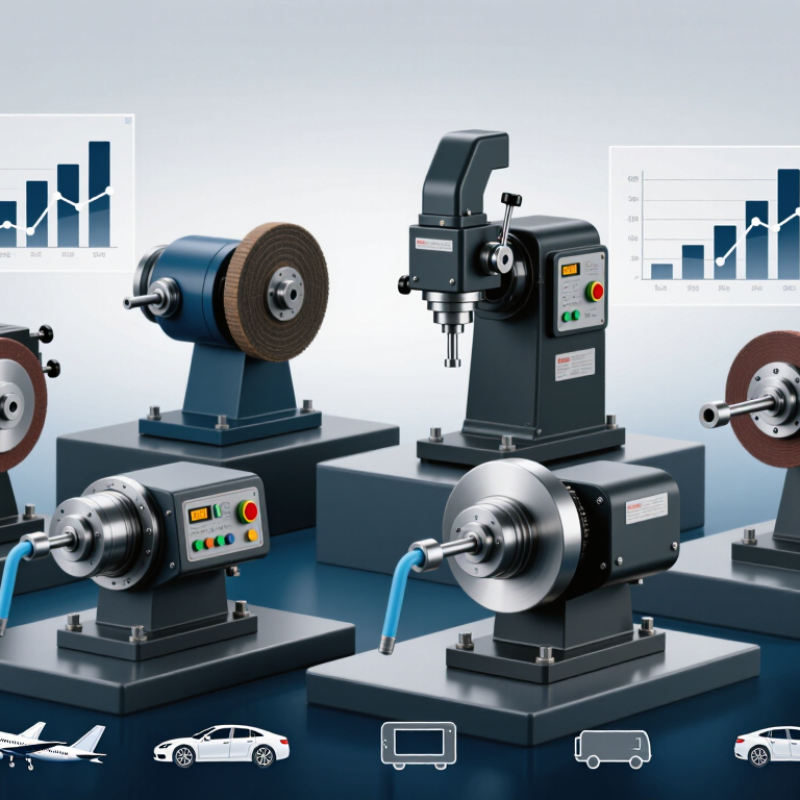
Grinding and polishing machines shape surfaces through controlled abrasion. Grinding removes larger amounts of metal, stone, glass, or ceramic with abrasive wheels, belts, or discs. Polishing uses finer abrasives to reduce scratches and create a smoother finish. The difference seems simple, but process control is demanding.
Modern machines may include manual tables, automatic feed systems, or computer-controlled axes. Operators adjust speed, pressure, coolant, and abrasive grade for each material. Grand View Research’s Grinding Machinery Market report projects steady global growth through 2030, supported by automotive, aerospace, and precision manufacturing demand. Its findings underline a practical point: accuracy depends on the complete process, not only the machine.
Surface quality also needs measurable standards. ISO 21920 provides terminology and guidance for assessing surface texture, helping manufacturers compare results more reliably. Yet one mistake remains common. A brighter surface is not always a better surface. Excessive polishing can round edges, remove tolerances, or create heat damage. I have found that real workshop results often differ from brochure specifications.
Tips: Check the material, target roughness, part geometry, and production volume before selecting equipment. Request test samples and inspect them under consistent lighting. Record abrasive life, cycle time, coolant use, and rework rates. These details reveal operating costs more honestly than purchase price alone. Be willing to revise the process.
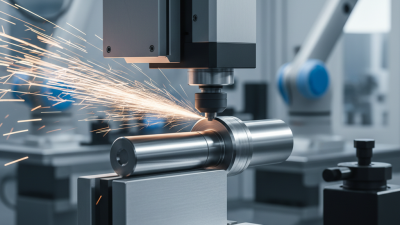
China’s grinding and polishing machine suppliers offer several machine types for different materials and production targets. Belt grinding machines suit weld removal, edge rounding, and stainless-steel finishing. They are flexible, but operators must control pressure carefully to prevent uneven scratches.
Surface grinding machines use a rotating abrasive wheel to create flat, accurate faces. They work well for metal plates, tools, and precision components. Cylindrical grinders handle shafts, pins, and other round parts. Centerless grinders support continuous production without fixing each workpiece between centers. For complex profiles, CNC grinding machines provide programmable movement and repeatable results.
Polishing equipment varies just as widely. Vibratory finishing machines use media, water, and compound to deburr batches of small parts. Planetary polishers can produce a fine finish on stone, concrete, and engineered surfaces. Automatic polishing lines add consistency, although they may require more setup time and skilled programming. Wet systems reduce dust during processing, while dry systems can simplify cleaning.
When assessing a Chinese supplier, inspect sample results rather than relying only on catalog images. Ask about spindle speed, abrasive compatibility, table accuracy, coolant control, and spare-part availability. A clean sample may hide difficult production conditions. Test different shapes and hardness levels. The best machine is not always the fastest one; an unsuitable abrasive can ruin an otherwise capable system. Some specifications remain unclear until the machine runs for several hours.
Choosing a Chinese grinding and polishing machine supplier requires more than comparing online prices. Review the supplier’s manufacturing experience, technical team, and export history. Ask for factory videos, inspection records, and recent customer references. A reliable supplier should explain machine capacity, abrasive compatibility, surface finish, and expected tolerances in clear language.
Request a sample test using your actual material and workpiece shape. Check the finished surface under consistent lighting. Measure cycle time, power use, noise, and material loss. Small details matter. Ask whether the machine uses standard bearings, motors, and control components. Replacement parts should be available without complicated procedures. Confirm installation support, operator training, warranty coverage, and response times before signing any agreement.
Do not trust impressive brochures alone. A factory may show its best result, not its average result. I would request three sample pieces from different production days. This reveals consistency. Also examine packaging, export documents, and loading protection. A low quotation can hide expensive tooling, shipping, software changes, or maintenance. One weak point remains: remote factory audits are never perfect. If the order is valuable, hire an independent inspector and use staged payments linked to measurable acceptance tests.
China’s leading grinding and polishing machine suppliers cluster around three manufacturing regions. The Yangtze River Delta, including Jiangsu, Zhejiang, and Shanghai, concentrates precision machining, control systems, motors, and export logistics. Guangdong adds strong automation, electronics, and surface-finishing capabilities. Shandong is notable for larger equipment, abrasive production, and heavy industrial applications.
UNIDO’s International Yearbook of Industrial Statistics 2024 reported that China generated approximately 31.6% of global manufacturing value added in 2022. This scale supports dense supplier networks and faster component sourcing. MarketsandMarkets estimates the global grinding machine market could grow from about USD 5.2 billion in 2023 to USD 7.0 billion by 2028. Demand is rising for CNC control, automated loading, and tighter dimensional accuracy.
In practical factory audits, buyers should inspect more than polished catalogs. Check spindle vibration at operating speed, coolant filtration, dressing accuracy, and repeatability across multiple shifts. Ask for inspection records and sample parts. Small differences matter.
A lower price may hide slower service.
Supplier strength also varies within each region. Some factories excel at customized cylindrical grinding, while others focus on flat surfaces or polishing lines. Buyers should compare test results, training support, spare-part response, and documented quality procedures. These details often reveal more than production volume, and honestly, many sourcing decisions still rely too heavily on photographs.
The chart compares major Chinese manufacturing regions using a normalized capability index based on machine-tool production concentration, precision machining expertise, abrasive-material supply, automation capacity, and export infrastructure. The index is a regional benchmark rather than a company ranking or market-share measurement.
Choosing a grinding polishing machine supplier requires more than comparing catalog prices. Ask how long the supplier has built similar equipment. Request sample results using your actual material, abrasive, and target finish. A polished steel sample may hide problems found on aluminum, stone, or coated parts. Reliable suppliers explain spindle speed, pressure control, coolant use, and dust management clearly. They should also provide test records, machine drawings, maintenance instructions, and customer references.
Before signing, verify the machine’s working size, motor power, table movement, automation, and consumable costs. Ask for cycle data on your own parts, not only on a standard test plate. Inspect welds, guards, wiring, filtration, and emergency controls during a factory visit or live video call. Small details matter. Check warranty coverage, response times, spare-part availability, and technician training. Written service commitments are more useful than friendly promises. Even experienced buyers can overlook this.
Review every quotation line by line. Confirm whether installation, commissioning, packaging, training, and replacement tooling are included. Set written acceptance criteria for surface roughness, flatness, edge radius, and production speed. Speak with at least two current customers about delivery delays, finish consistency, and after-sales support. A supplier may present a perfect demonstration while your material behaves differently. Keep test pieces, measurement records, and photographs during evaluation. That extra discipline can expose weaknesses before the machine reaches your workshop.
| No. | Evaluation Dimension | Weight | What to Check | Objective Evidence or Benchmark | Verification Method | Score (1–5) |
|---|---|---|---|---|---|---|
| 1 | Machine Application Fit | 15% | Confirm that the machine is designed for the required material, surface finish, workpiece size, and production volume. | Written process proposal covering material type, maximum workpiece dimensions, abrasive or polishing media, target finish, and expected cycle time. | Provide representative samples and request a recorded test or factory acceptance test using the same material and process. | 1–5 |
| 2 | Technical Specifications | 12% | Review working width, table or conveyor dimensions, spindle configuration, motor rating, speed control, dust or slurry handling, and compressed-air requirements. | Complete technical datasheet with units, tolerances, utility requirements, machine footprint, net weight, and operating limits. | Compare the datasheet with drawings, nameplates, user manuals, and a live machine demonstration. | 1–5 |
| 3 | Surface-Finish Capability | 15% | Assess repeatability of grinding, deburring, polishing, or satin finishing under defined process conditions. | Measured results such as surface roughness, flatness, burr height, gloss level, or dimensional tolerance, depending on the application. | Use an agreed inspection method and record before-and-after measurements from multiple workpieces. | 1–5 |
| 4 | Quality Management | 10% | Check whether the manufacturer has a controlled process for incoming materials, assembly, inspection, calibration, and corrective action. | A valid ISO 9001 certificate may support the assessment, but it should be checked for scope, issuing body, validity, and manufacturing-site coverage. | Request the certificate, quality-control plan, inspection records, calibration records, and a remote or on-site factory audit. | 1–5 |
| 5 | Safety and Compliance | 12% | Review guarding, emergency stops, interlocks, electrical protection, noise, dust or slurry containment, and risk-reduction measures. | Risk assessment aligned with ISO 12100; electrical design evaluated against IEC 60204-1 where applicable; destination-market conformity documents such as an EU Declaration of Conformity when CE marking is required. | Inspect the actual machine, electrical cabinet, safety circuits, manuals, warning labels, and conformity documentation. CE marking alone is not sufficient evidence. | 1–5 |
| 6 | Build Quality and Maintainability | 10% | Evaluate frame rigidity, corrosion protection, access to wear parts, lubrication points, drainage, cable routing, and ease of cleaning. | Assembly drawings, maintenance schedule, recommended spare-parts list, wear-part life estimates, and documented preventive-maintenance procedures. | Inspect a production machine rather than only a showroom sample; ask to see maintenance access and replacement procedures. | 1–5 |
| 7 | Controls and Documentation | 8% | Check controller language, parameter access, recipe storage, alarm history, user permissions, remote-support capability, and backup procedures. | Operating manual, electrical schematics, pneumatic or hydraulic diagrams, software backup procedure, alarm list, and spare-parts catalogue in the required language. | Operate the control system during a demonstration and verify that documentation matches the delivered configuration. | 1–5 |
| 8 | Customization and Integration | 6% | Assess the supplier’s ability to integrate conveyors, loading systems, dust collectors, slurry filtration, inspection devices, or factory communication interfaces. | Approved layout drawings, interface specifications, utility matrix, integration responsibilities, and change-control procedure. | Review comparable integration projects without relying only on photographs or unverifiable project claims. | 1–5 |
| 9 | Testing and Acceptance | 5% | Ensure that performance requirements are measurable before production begins. | Signed technical agreement defining capacity, cycle time, finish quality, dimensional limits, noise or safety requirements, and acceptance tolerances. | Use a factory acceptance test and, when practical, a site acceptance test with documented results and corrective-action deadlines. | 1–5 |
| 10 | Delivery and Packaging | 3% | Check manufacturing lead time, shipment configuration, export packaging, lifting points, installation requirements, and delivery responsibilities. | Production schedule, packing list, container-loading plan, shipping marks, installation drawings, and agreed Incoterms® 2020 rule. | Confirm packing materials, moisture protection, shock protection, and responsibility for transport damage in the purchase contract. | 1–5 |
| 11 | After-Sales Service | 4% | Evaluate installation, commissioning, operator training, troubleshooting response, remote support, and spare-parts availability. | Written service scope, response-time commitment, training agenda, recommended spare-parts stock, warranty terms, and escalation contacts. | Obtain service terms in writing and contact reference users where permitted, focusing on response quality rather than brand reputation alone. | 1–5 |
| Total Evaluation Weight | 100% | Calculate the weighted result by multiplying each score by its weight. Do not select a supplier on price alone; a failed acceptance test or missing safety documentation should be treated as a critical issue. | ||||
| Practical rule: Verify the exact machine configuration, test results, compliance documents, warranty terms, delivery conditions, and acceptance criteria in the purchase contract. Certification requirements depend on the destination market, machine design, and applicable regulations. | ||||||